To firmly advance the university’s "Double First-Class" construction and strengthen international talent cultivation, during the 2025 summer semester, at the invitation of several professors from the School of Management, renowned scholars from universities in the United Kingdom, Singapore, France, Australia, Japan and other countries offered 12 courses for the Summer International School open to all faculty and students of the university. Each course was headed by an invited in-school faculty member as the course coordinator, attracting more than 100 faculty and students across the university.
To ensure the smooth running of the Summer International School, the school set up a special working group before the program started and actively arranged staff for various preparations. A working group chat was established to organize syllabus drafting, agreement signing, student course selection and classroom quality supervision. A dedicated course group was built for each course, and the school’s official website and WeChat **** were used to publicize the programs to all teachers and students to attract wider participation. During the courses, course coordinators and teaching assistants stayed involved throughout, fully guaranteeing the smooth delivery of all classes.
Circular Business Model Innovation
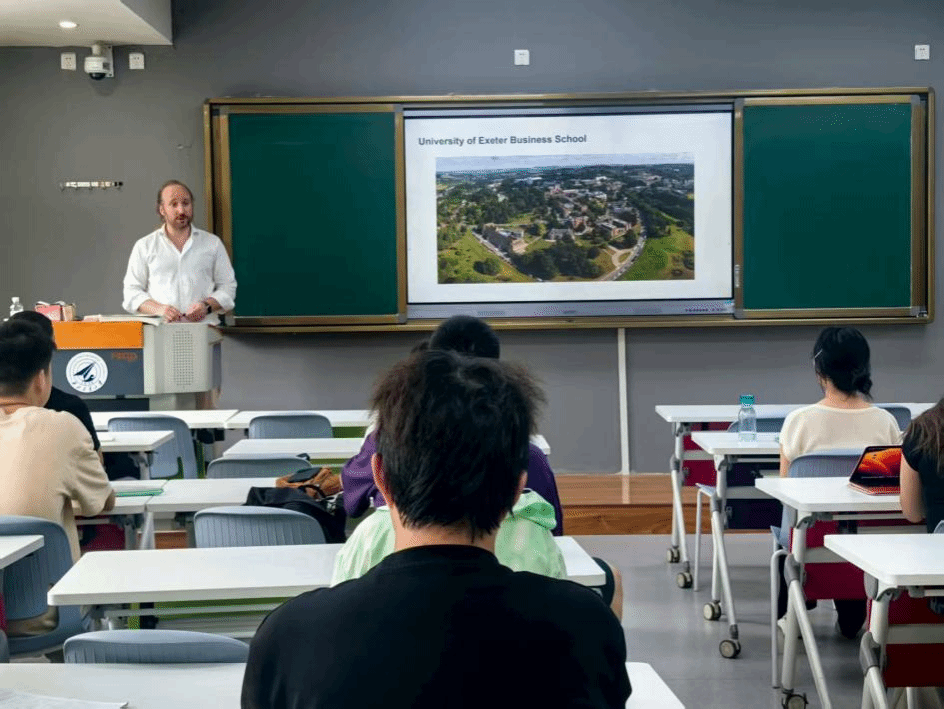
From July 3 to July 11, Associate Professor Enes Unal from Cranfield University, UK, taught the two-week course Circular Business Model Innovation. Starting from the concept of circular economy, Associate Professor Unal introduced its origin, development and significance under global resource and environmental challenges. Using real-world cases such as the circular practices of WSD Coffee and the business model canvas of BlaBlaCar, he deeply analyzed how circular design could be integrated into corporate operations, and guided students to reflect on business model innovation and transformation empowered by modern technologies. The course covered both theoretical frameworks and up-to-date corporate practices, fully demonstrating the cutting-edge value of circular business models in promoting sustainable development.
Beyond knowledge instruction, the course also included specially designed practical sessions. Students worked in groups to design and present circular business solutions for "airline catering tableware" based on concepts learned in class. During the presentations, students actively communicated and raised questions. Associate Professor Unal gave detailed comments on each group’s work and constructive suggestions on the logic of circular pathways and the practical feasibility of product designs, greatly improving students’ practical application abilities and critical thinking skills.
Optimization Theory, Methods and Applications
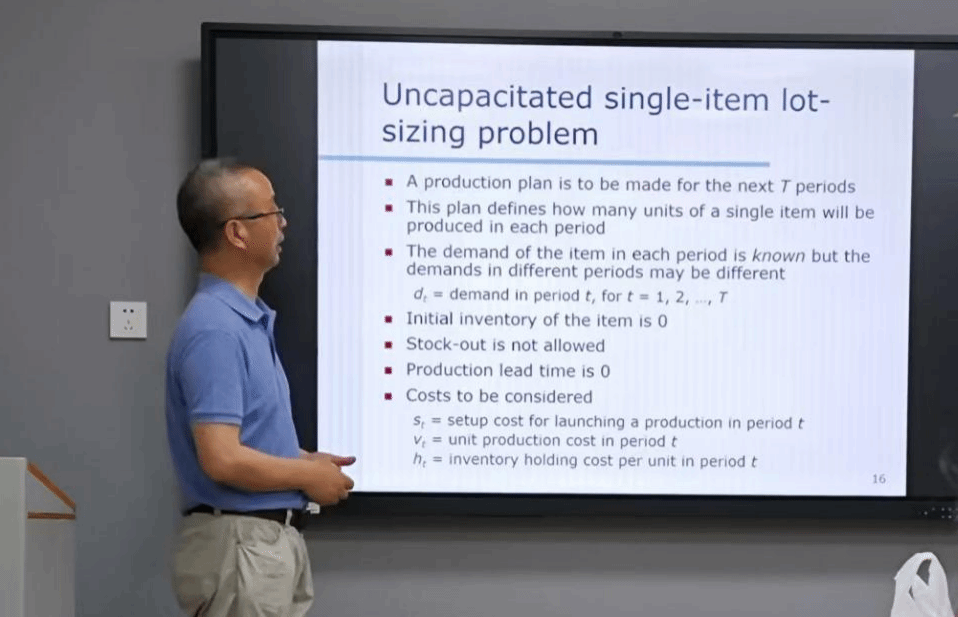
Optimization Theory, Methods and Applications was taught by Professor Haoxun Chen from the University of Technology of Troyes, France. From July 14 to July 19, in the one-week course, Professor Chen drew on his profound academic expertise to systematically deliver the basic knowledge system of optimization theory, reviewed international cutting-edge research progress and trends, and demonstrated the practical application paradigms of optimization methods in typical scenarios.
The core modules included key theories and methods such as mathematical modeling, linear programming, dynamic programming, exact algorithms and heuristic algorithms. The course helped students understand the mathematical nature of management decision problems, use diverse optimization frameworks and algorithmic tools to analyze, model and solve complex systems, and further deepen their understanding and application capabilities of optimization theories and methods.
Organization and Strategic Theory
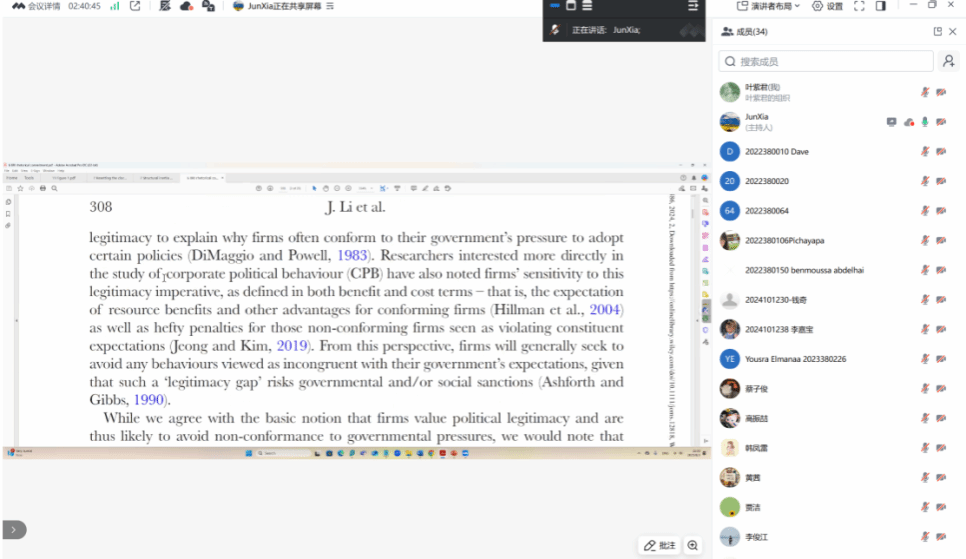
Professor Jun Xia from the Department of Strategic Management, Naveen Jindal School of Management, The University of Texas at Dallas, USA, taught Organization and Strategic Theory online from July 22 to August 7. The course covered organizational theory, multinational strategy, mergers and acquisitions, strategic alliances, and the development of enterprises in emerging economies.
Beginning with the topic "What is NOT a theory", Professor Xia vividly explained how to apply theories and conduct empirical research in academic studies. He emphasized that every scholar has a mindset and research interest that best suits himself or herself; one may deepen research in a field where one has the greatest talent and strongest insights, and expand management research starting from real-world phenomena.

Operations Management
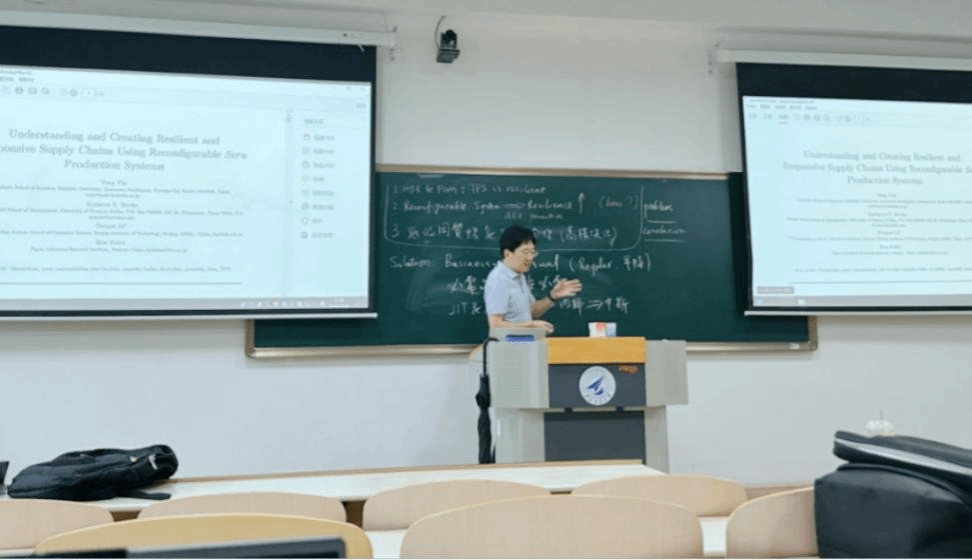
From June 23 to June 30, Professor Yin Yong from Doshisha University, Japan, offered the course Operations Management. Professor Yin introduced the connotation, objectives, classic theories of operations management and how to apply theories into practice. Taking the production systems of Ford and Toyota as backgrounds, he elaborated on lean production and the classic rule in operations management — Little’s Law: Inventory = Time × Rate — and its applications.
He also explained how to identify and improve bottlenecks in corporate production and operations to enhance operational efficiency. Professor Yin’s lectures progressed from basic to advanced content. He used cases and questions to help students understand key knowledge, and also introduced prominent scholars and their representative studies for each topic, greatly broadening students’ academic horizons.
Theory Building in Marketing / Management
Theory Building in Marketing / Management, taught by Professor Hang Haiming from the University of Bath, UK, was a one-week course. It held academic discussions at different depths for students at various academic levels, aiming to ensure that every participating student benefited from the lectures.
The course focused on the essential foundations and skills for theory building in marketing and management, as well as the approaches and steps for theory-driven research design. It was mainly divided into four modules: problem statement and participatory academic research, literature review, the role of theory and types of models or designs, and key elements of model or theory-driven research design.

Marketing Strategy
From June 30 to July 11, Associate Professor Wang Xinchun from West Virginia University, USA, taught the two-week course Marketing Strategy. From the multi-level perspectives of individual, group, firm, inter-organization and industry, the course conducted in-depth discussions on theories, commonly used research methods and paper writing in marketing strategy research.
It covered research methodology for theory building, the nature of marketing and marketing strategy, transaction cost and agency theory, innovation and new product development, interdisciplinary research between marketing and finance, marketing and entrepreneurship, and other topics. Through paper sharing, presentations and group discussions, the course helped students systematically understand the basic framework of marketing strategy research and keep abreast of recent developments in the field.
Business Data Analytics Without Programming
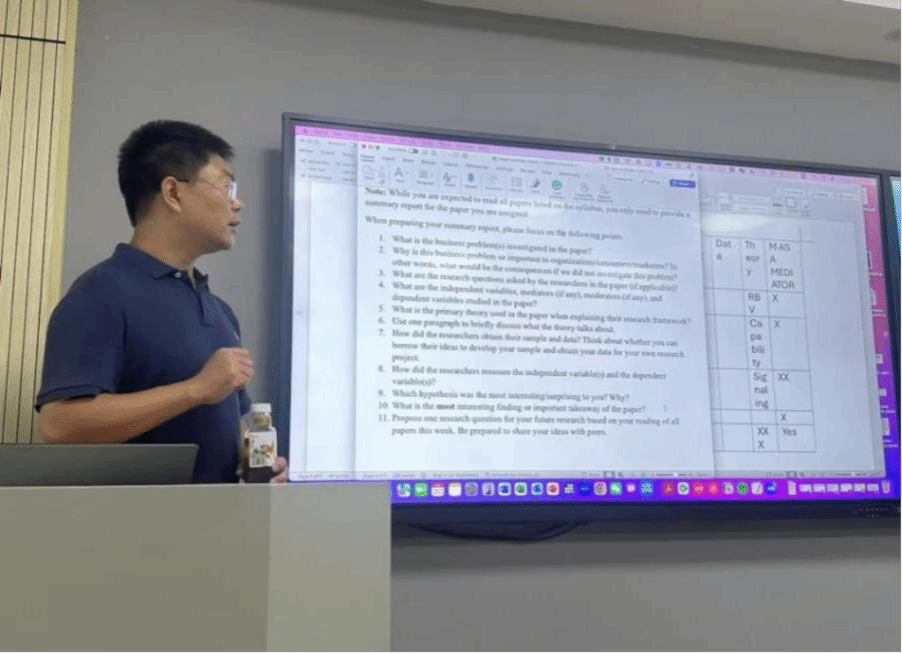
From June 23 to July 5, Assistant Professor Tang Zhenya from the Monfort College of Business, University of Northern Colorado, taught Business Data Analytics Without Programming. Over 16 academic hours, the course took business data analysis as the starting point and unfolded step by step from research question formulation, literature review skills, theoretical selection to research method application.
It analyzed potential challenges in academic research in the information systems field and provided ideas and inspiration for students to carry out scientific research. Professor Tang’s lectures were clear and progressive. He shared his experience and skills in scientific research through interactions with students. The course featured a strong academic atmosphere and helped students master data analysis and research writing skills in a relaxed environment, receiving wide praise from teachers and students.
International Logistics and Supply Chain Management
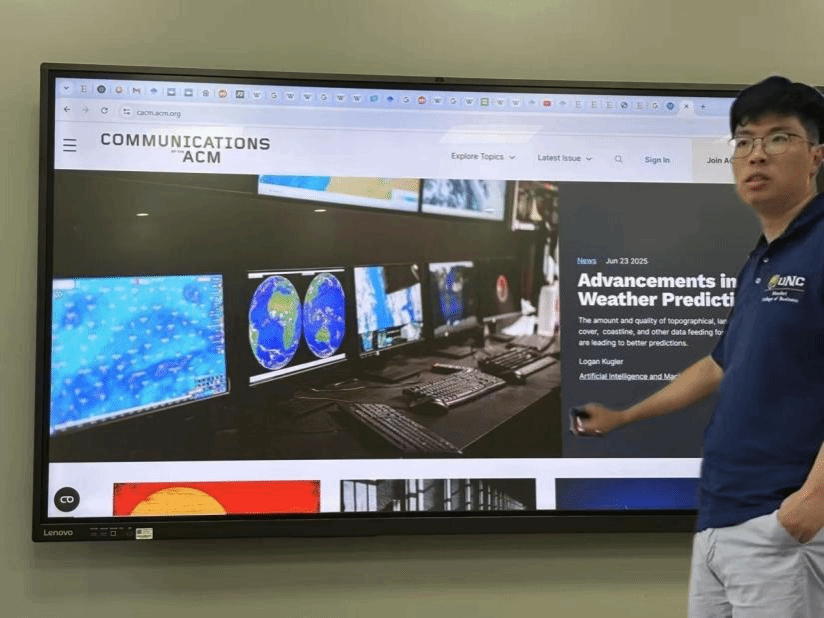
From July 1 to July 5, Professor Shi Yangyan from Macquarie University, Australia, a Fellow of the Chartered Institute of Logistics and Transport (CILT), UK, taught International Logistics and Supply Chain Management. The 32-hour course attracted many students.
Professor Shi guided students to analyze decision logic in complex supply chain scenarios through carefully designed questions and encouraged instant questions and in-depth discussions. Students held lively group presentations on real cases such as supply chain management in multinational enterprises and the application of digital technologies in cross-border transportation, turning abstract theories into vivid and understandable content. The course effectively deepened students’ understanding of the basic concepts and operational mechanisms of international logistics.
The course not only provided a platform for students to access cutting-edge international knowledge, but also improved their ability to analyze and solve practical problems through a participatory and practice-oriented teaching model. Teachers and students commented that the course combined academic depth with industrial practice and offered important insights for future study and research.
Financial Statement Analysis
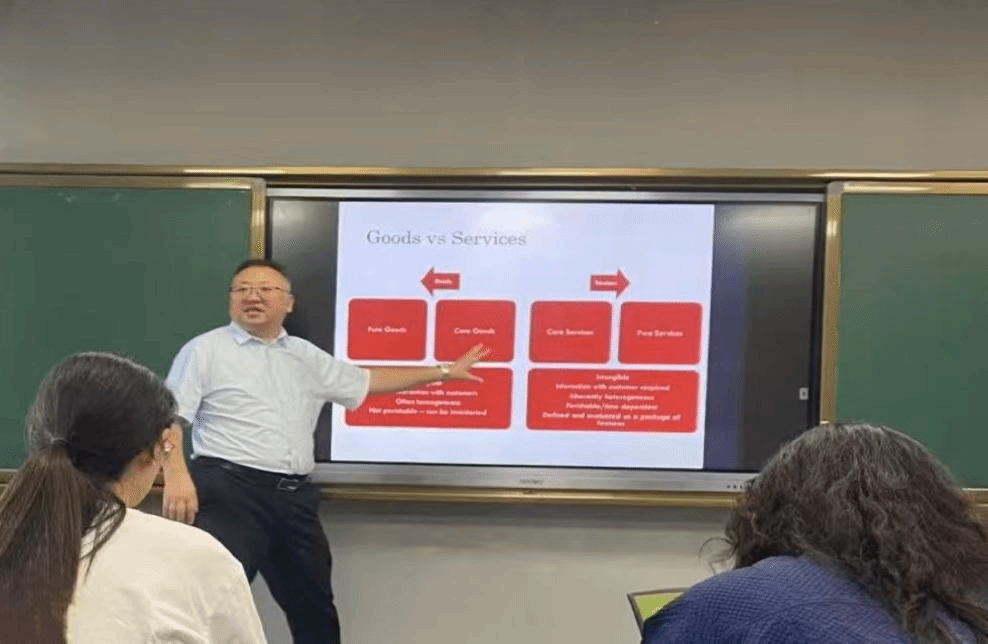
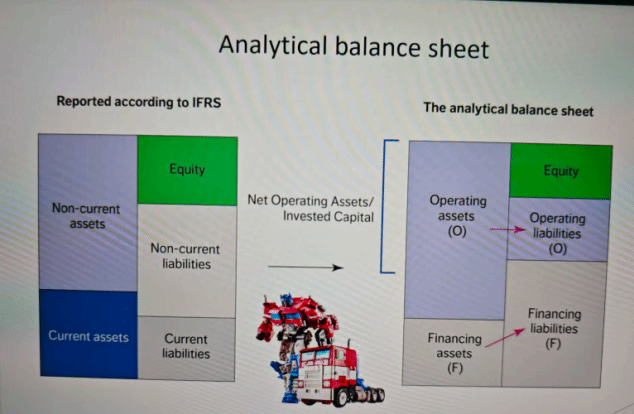
From June 23 to July 1, Professor Zhang Yanlei from Copenhagen Business School taught Financial Statement Analysis. Starting with "What information do financial statements convey", the course centered on "How to discover and mine information in financial statements", presented the instructor’s understanding of the value of financial statements, and demonstrated the full process of processing, analyzing and comparing data from corporate financial statements to evaluate and interpret a company’s financial position.
The course not only taught students how to identify and calculate key financial ratios, but also guided them to focus on equally important non-financial information through real cases, helping them accurately locate and deeply mine value-relevant information in annual reports for different users.
Corporate Financial Strategy
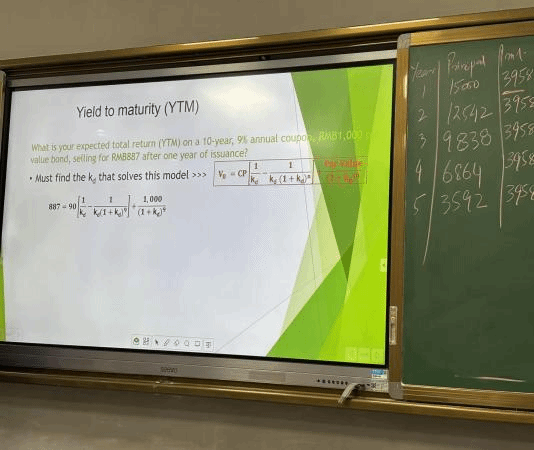
From June 24 to July 8, Dr. Ramiz Ur Rehman, Dean of the International Business School at Teesside University UK and the Lahore University Business School, delivered the course Corporate Financial Strategy.
In class, Ramiz introduced the common strategic features shared by different companies: globality, long-term orientation, risk and dynamism. He then guided students to explore the financial "individuality" behind these common features. He also explained the impacts of four functionally different strategies — investment strategy, financing strategy, operating strategy and dividend strategy — on enterprises. By switching perspectives among different stakeholders, students gained a deeper understanding of the strategic goals: achieving balanced and efficient flow of corporate funds, strengthening financial competitive advantages, and conducting overall, long-term and creative planning for corporate capital flows.
Decision Analysis
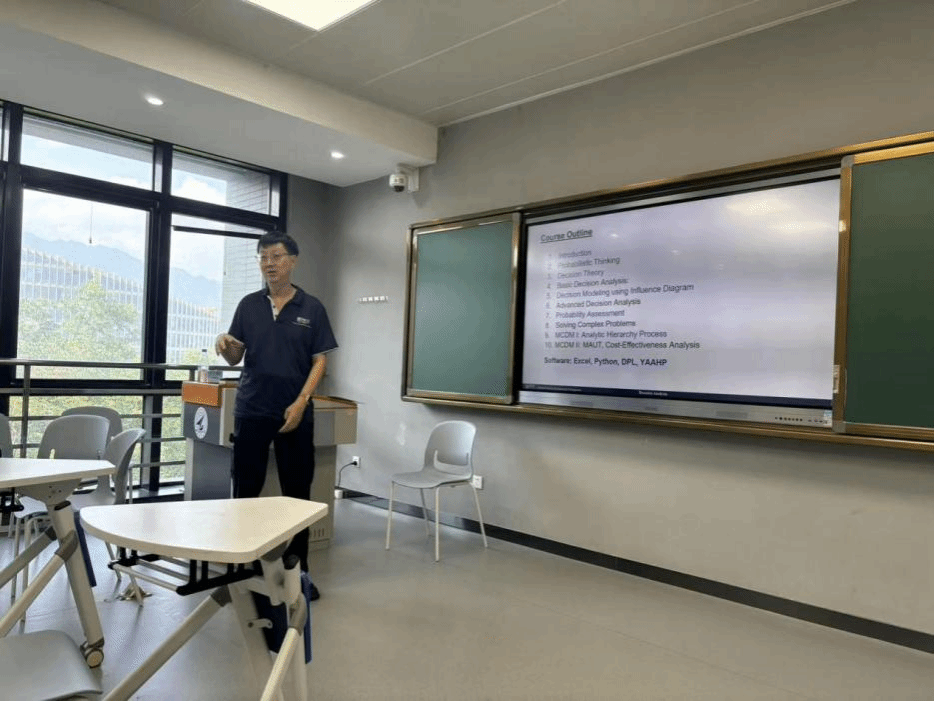
From June 23 to July 3, Professor Poh Kim Leng from the National University of Singapore taught Decision Analysis. The course covered core topics including decision trees, influence diagrams, utility functions, risk preference modeling, and the Analytic Hierarchy Process (AHP).
It systematically included core theories and practical methods of decision analysis, building a complete knowledge system from basic models to complex decision-making. By introducing the DPL software for decision modeling and utility function applications, the course bridged the gap between theory and practice, helping students master scientific decision-making methods, improve decision-making abilities in complex situations, and lay a solid knowledge foundation for solving real-world problems.
Case Study Method and Journal Publication
From August 11 to August 15, Associate Professor Wei Ruiqi from emlyon business school, France, taught Case Study Method and Journal Publication. The 16-hour course systematically covered the theoretical foundations of case study, research design, data collection and analysis, theory building, and academic writing and publication strategies.
During the course, Associate Professor Wei combined classic literature and practical cases and used lectures, case analysis, group discussions and hands-on exercises to help students master the ability to independently conduct high-quality case studies and improve their research skills in exploring management and business issues and publishing academic papers. All participating students spoke highly of the course and reported great gains.
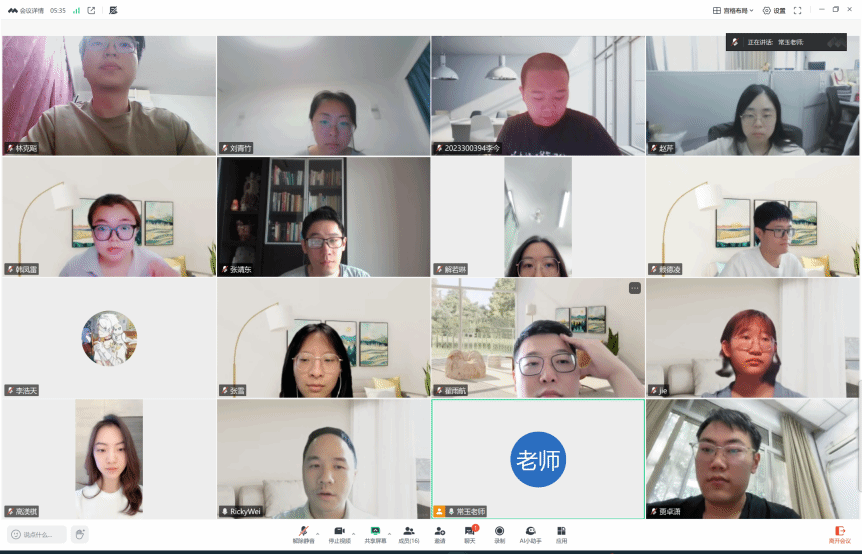
In this year’s Summer International School, the School of Management offered systematic courses covering management science, economic theory, marketing and operations, financial accounting and other disciplines, integrating both theoretical exploration and practical analysis.
In the teaching process, the invited experts adopted progressive teaching methods and translated complex concepts into easy-to-understand content. Students showed strong enthusiasm for learning, forming a positive interactive learning atmosphere. During after-class tutoring, instructors patiently answered every student’s questions, and their professionalism and dedication received wide acclaim.
Text & Photos / Teaching Assistants of the Summer International School,Reviewed by / Shao Jing, Zhang Shuang
 CHINESE
 Search