On the morning of June 5, Robert C. Merton, 1997 Nobel Laureate in Economics, Distinguished Professor of Finance at the MIT Sloan School of Management, and member of the U.S. National Academy of Sciences, visited the School of Management and held an in-depth and inspiring face-to-face exchange with over 30 participants, including faculty representatives and student representatives from the Zhujian Class at the university and school levels, in Meeting Room 308, Youyi Campus. Che Ada, Dean of the School of Management, and Ms. Azita Sharif, CEO of DSI Group, attended the meeting. The meeting was chaired by Shao Jing, Director of the International Affairs Office of the School of Management.
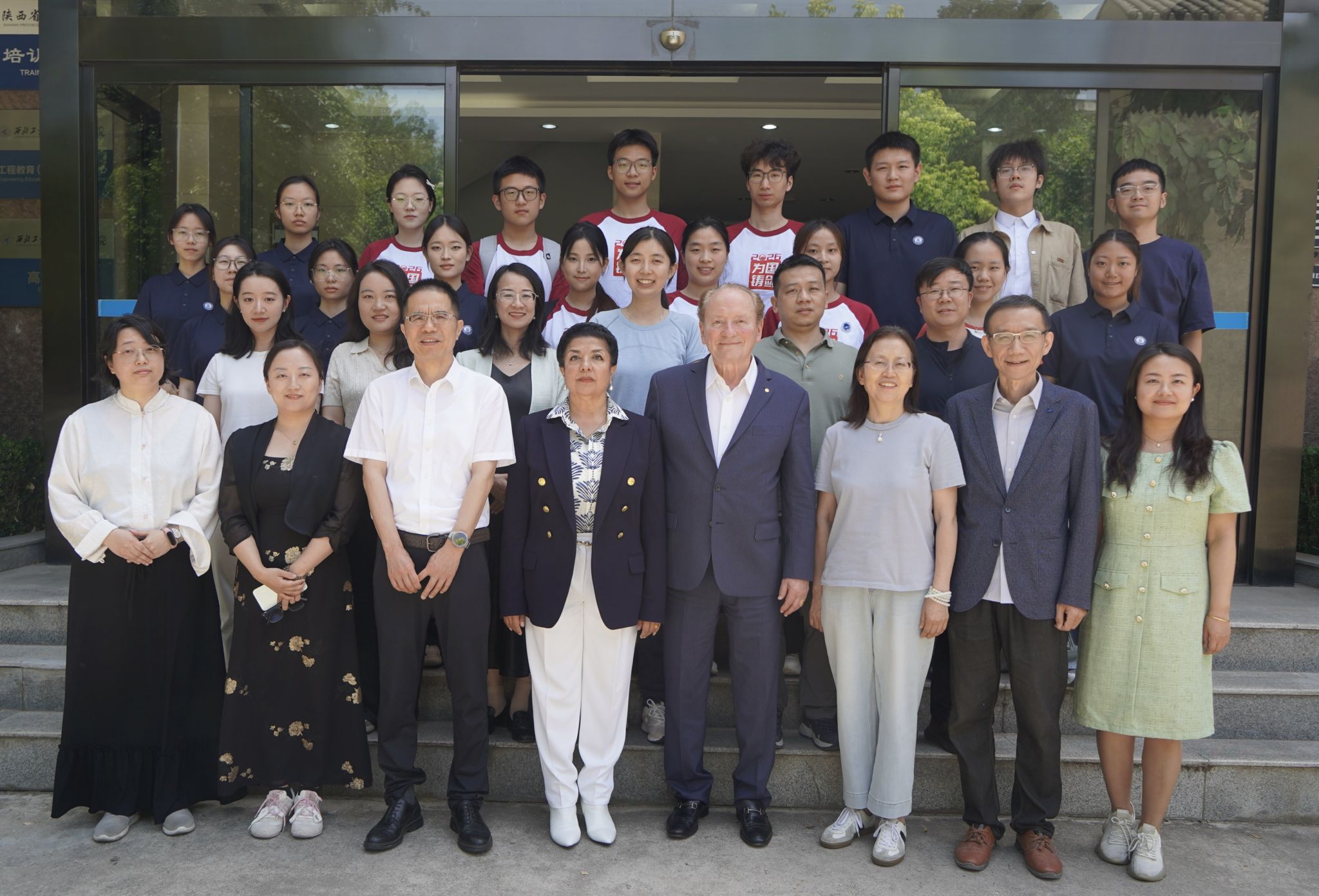
At the beginning of the event, Che Ada, on behalf of the School, extended a warm welcome to Professor Merton and his delegation and presented them with souvenirs. Shao Jing briefly introduced Professor Merton's groundbreaking contributions in areas such as financial option pricing and his global academic influence. During the subsequent exchange session, Professor Merton engaged in a candid and profound dialogue with the attending faculty and students on core topics including "uncertainty," "artificial intelligence and finance," "interdisciplinary research," and the growth paths of young scholars, offering insights and answers drawn from his deep erudition and wisdom.
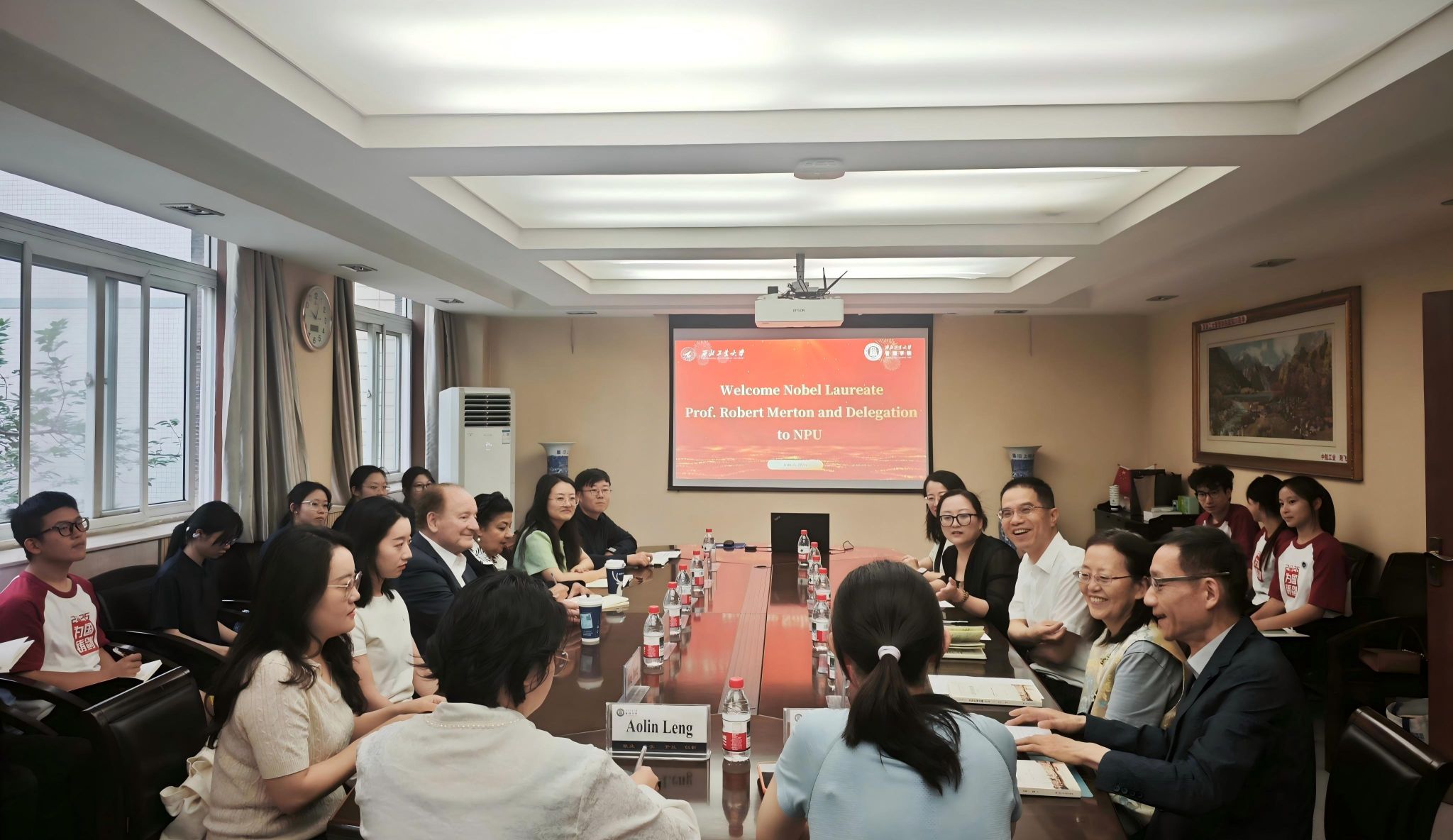
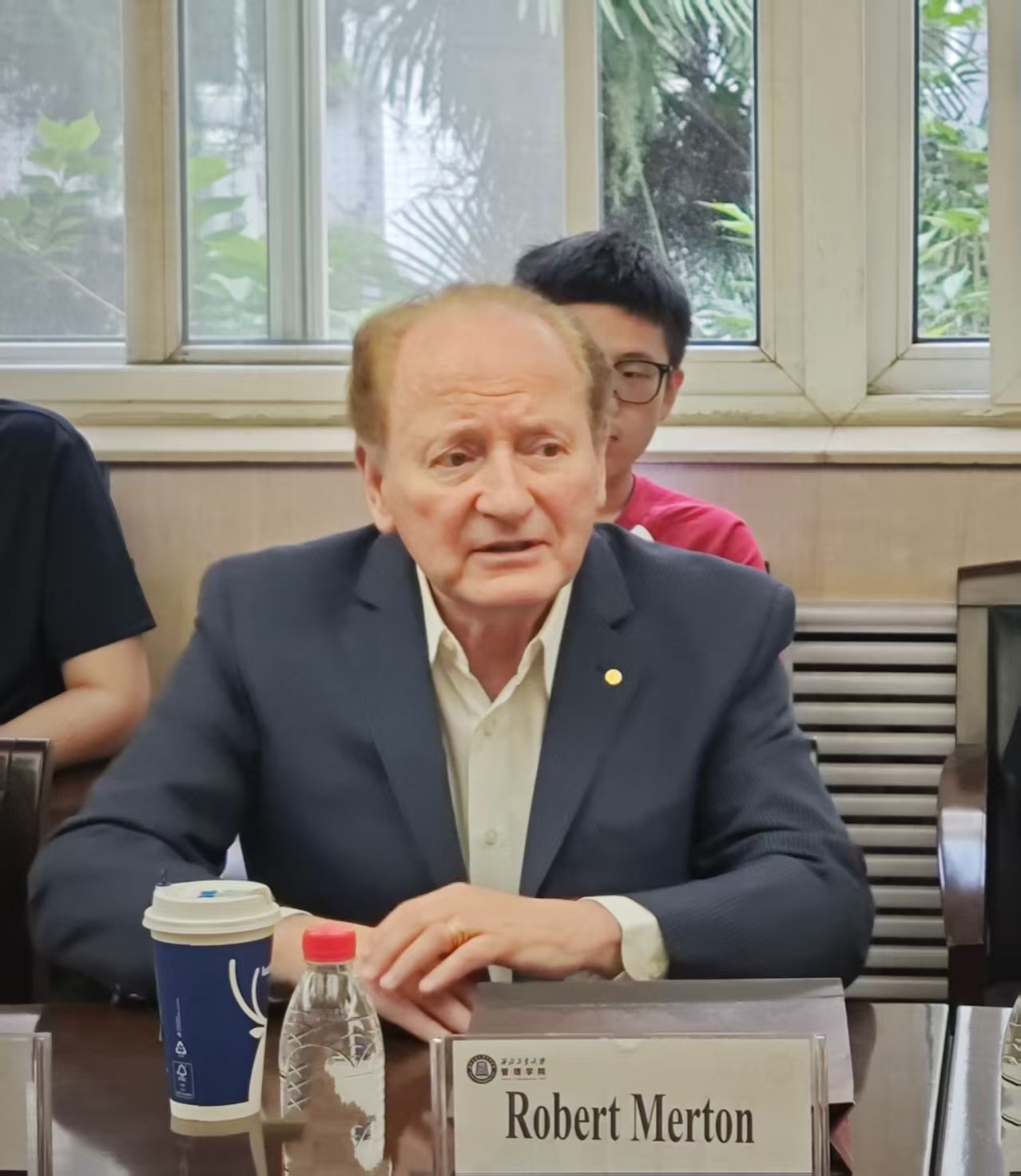
When discussing cutting-edge issues such as artificial intelligence and financial pricing models, Professor Merton, starting from the fundamental feedback mechanisms of economics, pointed out that any technological advantage may be rapidly neutralized by competition, and the window for excess returns is continuously shrinking. Drawing on his own research experience, Professor Merton provided valuable insights for young scholars embarking on their research journeys. Using his own experience of seeking mathematical tools for continuous-time financial models as an example, he emphasized that the key to research lies in "problems first, knowledge later," stressing that "knowing what to do is important, and knowing what not to do for the time being is equally important." In response to a student's question about whether "AI replacing human analysts could lead to a market catastrophe," Professor Merton noted that the very nature of the financial world is filled with uncertainty and risk. He repeatedly mentioned that "flexibility" and "uncertainty" are the top key words in his work. When asked about "the future of finance," Professor Merton admitted that he did not know what specific solutions would emerge in the future, but he held firm confidence in the collective wisdom and resilience of humanity. He encouraged the young attendees: rather than predicting the future, it is better to prepare solidly. One should first build a solid foundation, mastering profound principles rather than superficial forms.
This exchange concluded successfully in a warm atmosphere. Professor Merton's insightful sharing presented a feast of ideas for the attending faculty and students. Participants expressed that through close dialogue with an international master, they not only deepened their understanding of the frontiers and core principles of finance, but also gained valuable inspiration in how to pose questions, select research directions, and build a robust knowledge system.
About the Speaker:
Robert C. Merton is a member of the U.S. National Academy of Sciences, a senior professor at the Massachusetts Institute of Technology, and the 1997 Nobel Laureate in Economic Sciences. He is hailed as one of the founders of modern finance. As a student of Nobel Laureate Paul Samuelson, Merton refined and improved the Black-Scholes model in his academic research and jointly developed the Black-Scholes-Merton pricing theory, laying the core theoretical foundation for the pricing of financial derivatives. He pioneered the extension of mathematical methods for option pricing into various areas of financial practice, providing quantitative analytical tools for modern financial risk management. His classic works, including Continuous-Time Finance, have become authoritative textbooks widely adopted by business schools worldwide. Professor Merton has long been deeply engaged in industry-academia collaborative development. He has served as President of the American Finance Association and Managing Director at J.P. Morgan, actively promoting the practical application of financial engineering theories in industry, and enjoys towering prestige in both international financial academia and industry.
(Written by Qi Xiaohan, Quan Mengtianzi / Reviewed by Shao Jing, Zhang Shuang)
 CHINESE
 Search