To advance the development of world-class disciplines and the School, and to enhance the quality of international talent cultivation, the School of Management’s 2026 Summer International Program successfully concluded in mid-July. The program invited scholars from prestigious overseas institutions including the University of Technology of Troyes, University of Liverpool, Durham University, Copenhagen Business School, KEDGE Business School, Macquarie University, RMIT University, and La Trobe University to deliver courses. It attracted over a hundred undergraduate and graduate students, as well as international students from across the university. Covering cutting-edge fields such as supply chain management, marketing, financial analysis, optimization theory, econometrics, and AI business applications, the program provided students with an excellent platform for direct engagement with international academic frontiers.
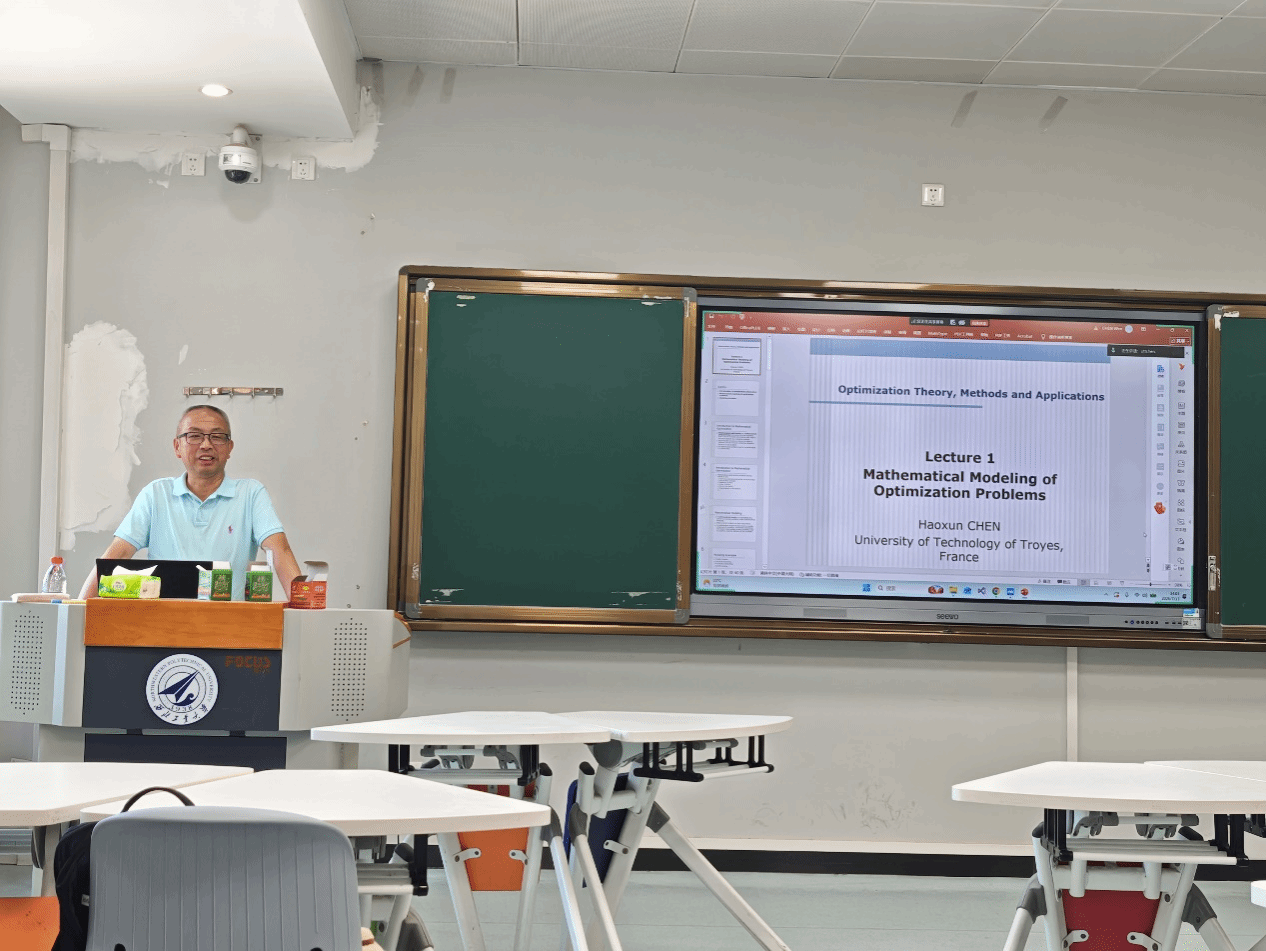
Optimization Theory: Methods and Applications, taught by Professor Chen Haoxun from the University of Technology of Troyes, France, began with modeling real-world problems. It systematically covered exact solution algorithms for mixed-integer programming, metaheuristics, and stochastic optimization modeling approaches. Core methods included Branch and Bound, Branch and Price, Benders Decomposition, and Lagrangian Relaxation. Through extensive case studies, the course clarified the design rationale and applicable boundaries of various algorithms, helping students move beyond rote memorization of isolated concepts. It guided them to understand the trade-offs among accuracy, efficiency, and uncertainty handling, connecting previously fragmented knowledge in operations research and optimization. This provided clear pathways for subsequent research and application.
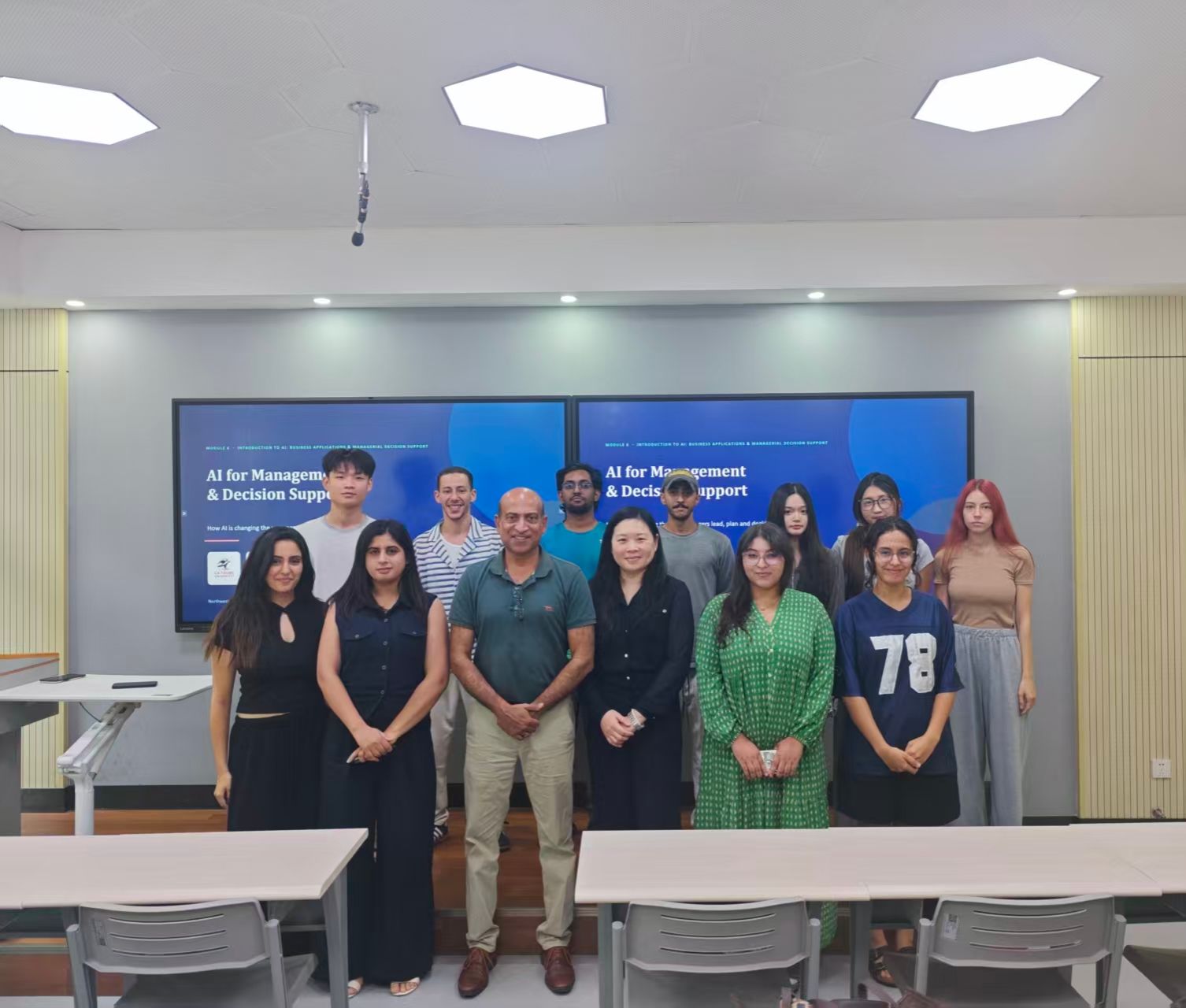
Artificial Intelligence: Business Applications and Managerial Decision-Making, led by Professor Damminda Alahakoon from La Trobe University, focused on the implementation logic of AI in real business scenarios. It systematically addressed core topics such as generative AI, AI-assisted decision-making, and AI applications in marketing, while also delving into ethical and practical challenges like privacy protection, algorithmic bias, and application risks. Balancing theoretical value with practical warnings, the course helped students comprehensively understand both the potential and limitations of AI in enhancing business efficiency. Many international students noted the course's strong practical relevance, finding it inspiring for both future academic research and practical application.
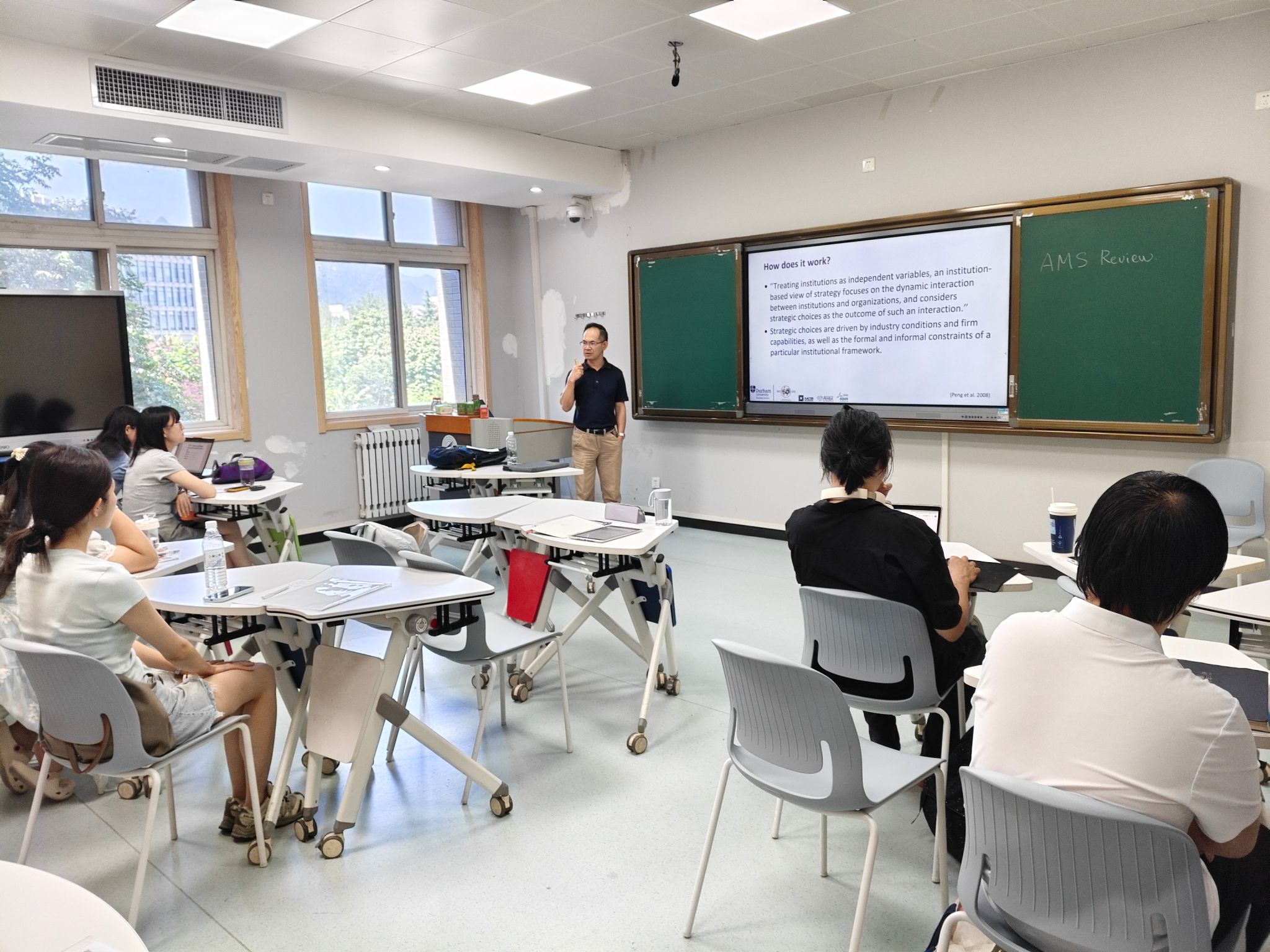
Marketing Strategy and Performance: An International Perspective, taught by Professor He Xinming from Durham University Business School, systematically reviewed classic marketing frameworks such as the Theory of the Triangle, Porter’s Five Forces, and the STP strategy. Using real-world cases from global companies like Walmart, the course illustrated how theories are applied in practice. It also incorporated frontier research findings from top-tier journals, including UTD24, guiding students to grasp the latest academic trends in marketing. Delivered entirely in English, Professor He encouraged students to break boundaries by sharing his own cross-disciplinary experiences. This approach not only enhanced students' professional knowledge but also improved their cross-cultural academic communication skills and critical thinking.
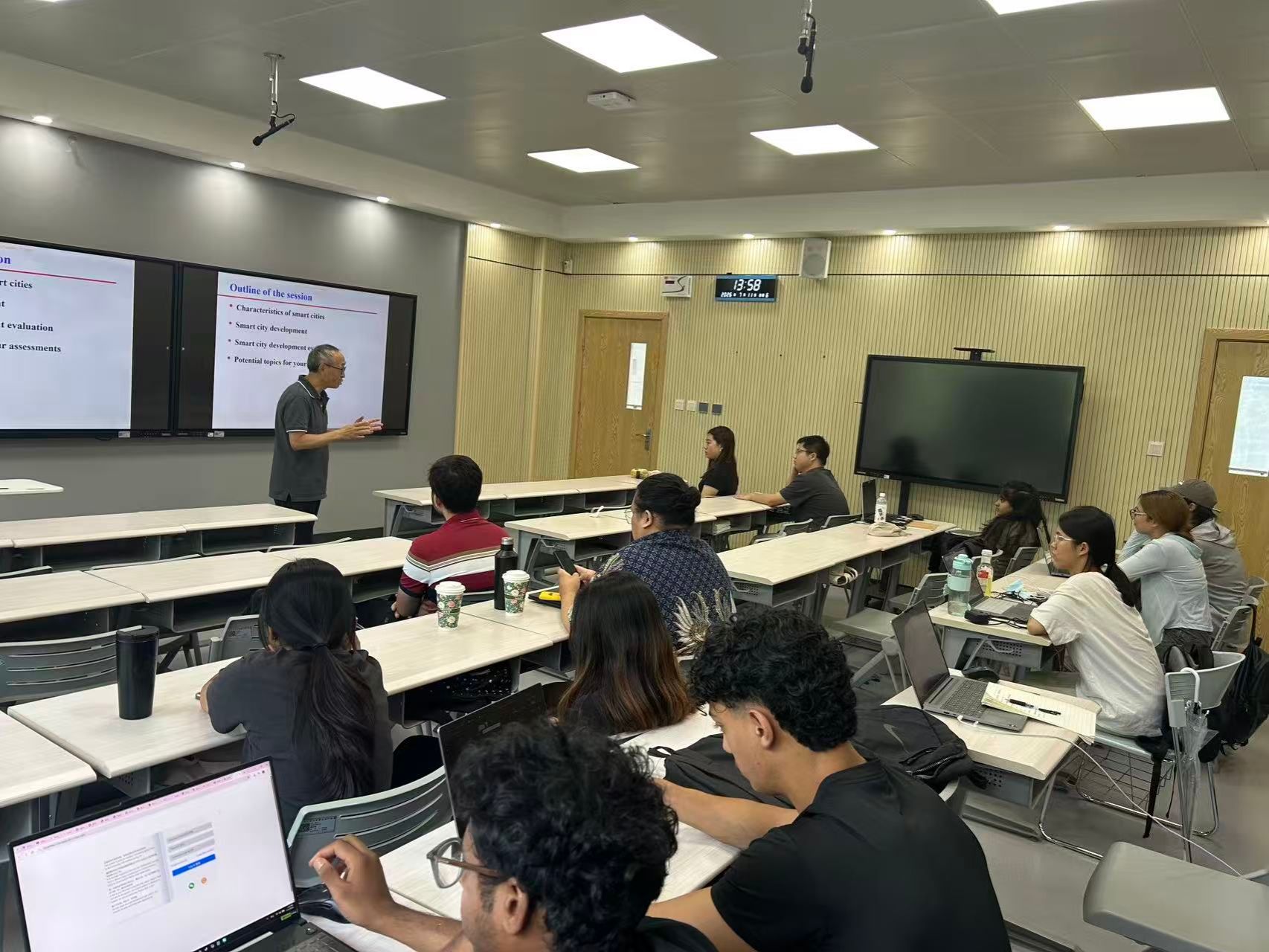
Digital Innovation and Smart Cities, presented by Associate Professor Hepu Deng from RMIT University, provided an overview of smart cities and digital innovation, aiming to achieve effective and efficient delivery of modern urban public services. The course introduced global cases and experiences of innovative smart cities to improve urban livability and sustainability. This led to a comprehensive discussion on the forefront of digital innovation research in the context of smart cities.
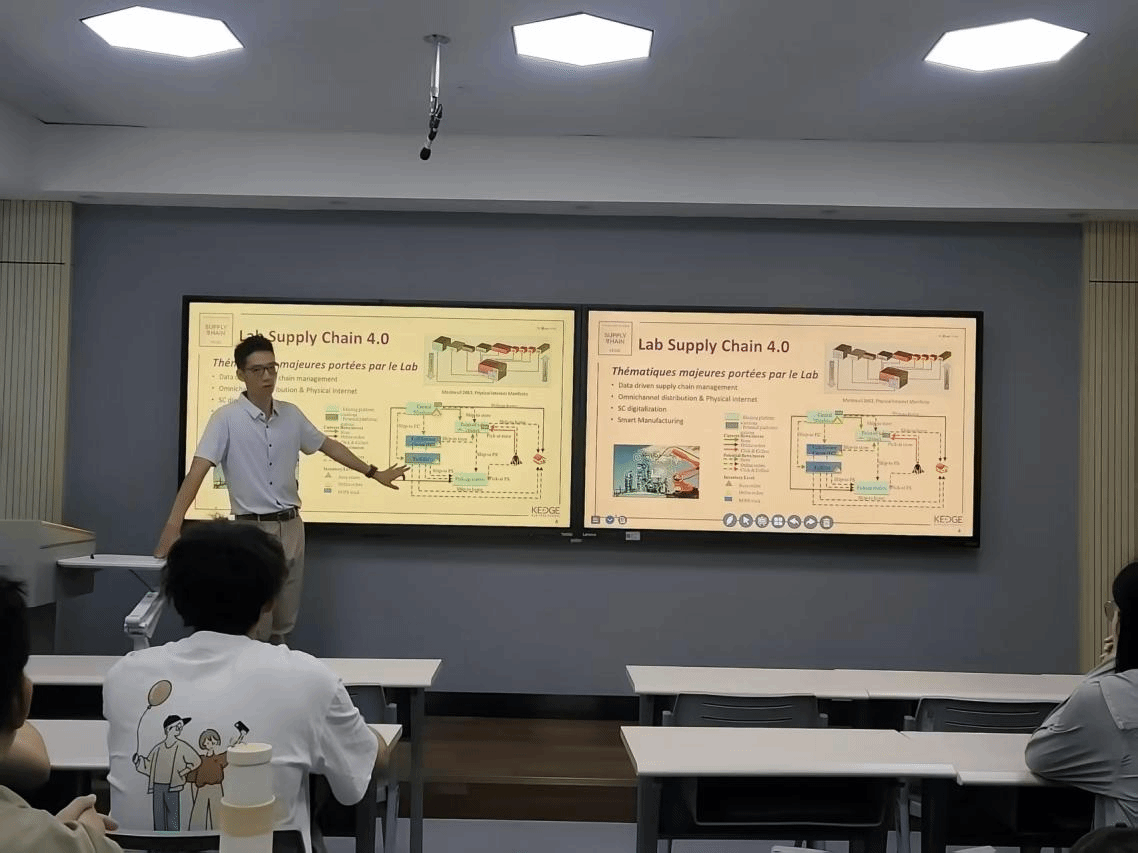
Supply Chain Resilience and Risk Management, delivered by Associate Professor He Junkai from KEDGE Business School, France, systematically covered supply chain risk identification methods, analysis of global supply chain dependencies, principles of resilient network design, and applications of risk management tools. It addressed various disruption scenarios including demand fluctuations, supplier failures, geopolitics, and natural disasters. Using the international expansion of bicycle manufacturers TREK and GIANT as a running case, the course integrated lectures, computational exercises, case discussions, and group presentations. It guided students through strategic simulations involving network location, sourcing decisions, and production layout. This approach helped students move beyond the traditional "cost reduction and efficiency" mindset, fostering a holistic perspective on balancing supply chain risks.
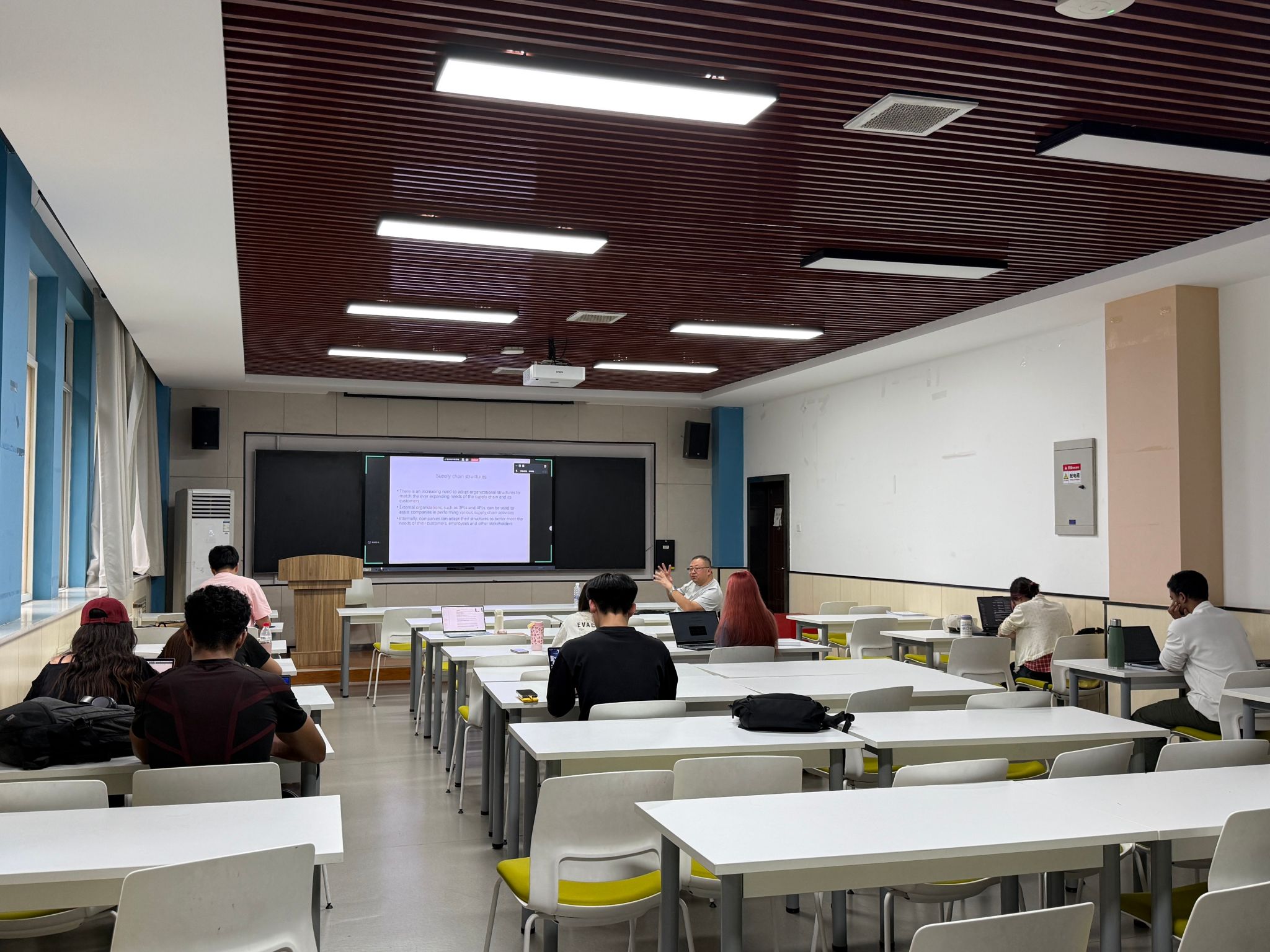
International Logistics and Supply Chain Management, taught by Associate Professor Shi Yangyan from Macquarie University, emphasized deep integration of theory and practice. Through international cases like Apple’s global supply chain and Meditech’s expansion challenges, students understood the logic of supply chain management as a core source of competitive advantage. A group assignment centered on optimizing BYD’s supply chain required students to simulate the work of supply chain analysts—from identifying pain points and designing strategies to developing action plans—exercising their systems thinking. The highly interactive course moved beyond rote lecturing, encouraging student participation in case discussions, independent company research, and presentations. This allowed students to deepen their understanding by applying theory to solve real problems, effectively broadening their global perspective and risk anticipation capabilities.
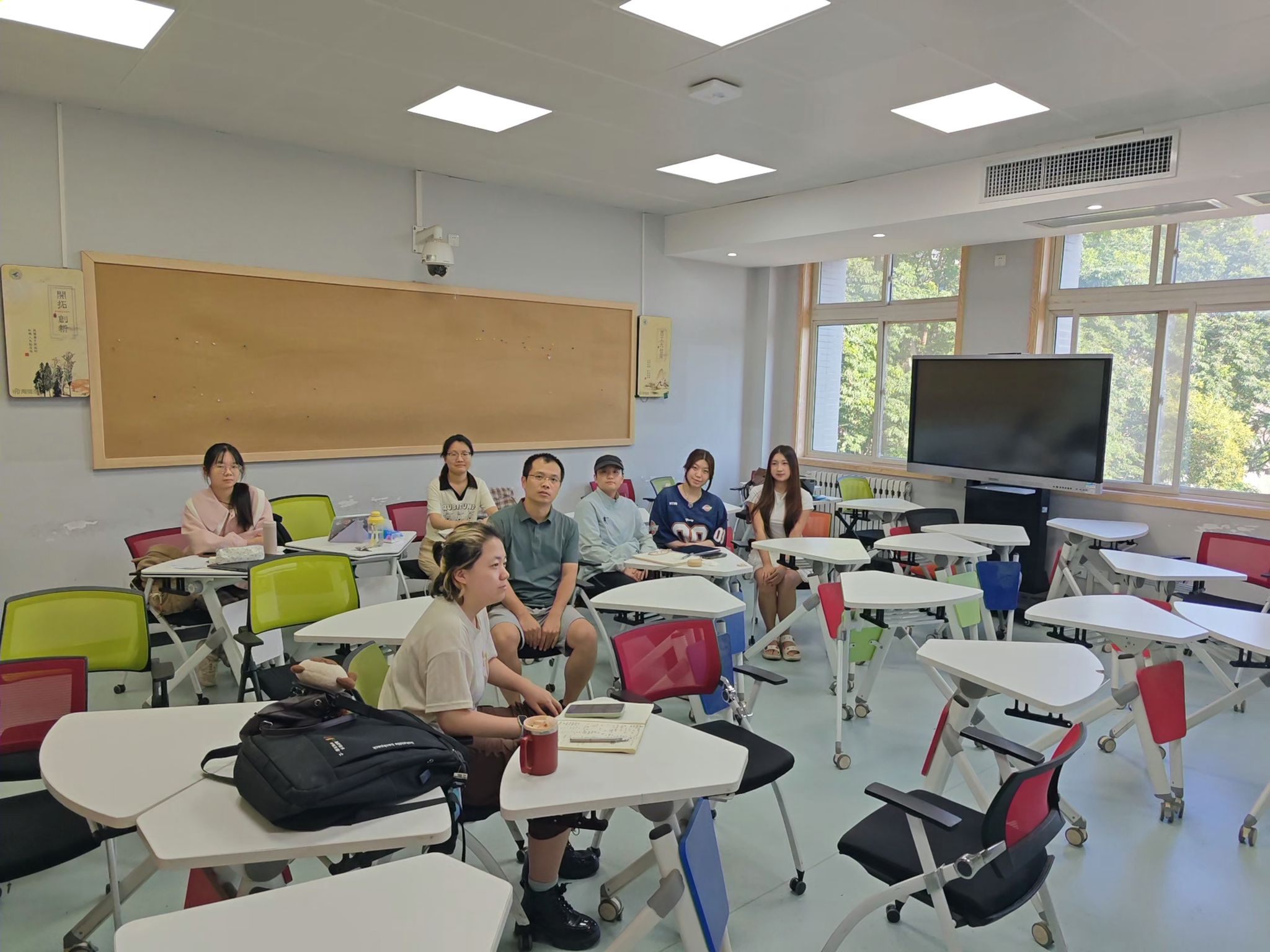
Financial Statement Analysis, led by Associate Professor Zhang Yanlei from Copenhagen Business School, combined International Financial Reporting Standards (IFRS) with frontier capital market practices. It systematically covered core modules including analytical income statements and balance sheets, profitability analysis, growth analysis, liquidity risk assessment, and financial forecasting and valuation. Attracting students from various schools including the School of Management and the School of Public Policy and Management, Professor Zhang guided discussions centered on real corporate financial data. Breaking away from traditional accounting frameworks, the course emphasized the articulation of indicators and business substance, equipping students with methods to assess corporate financial health. This laid a solid foundation for future research and practice in investment analysis, financial management, and related fields.
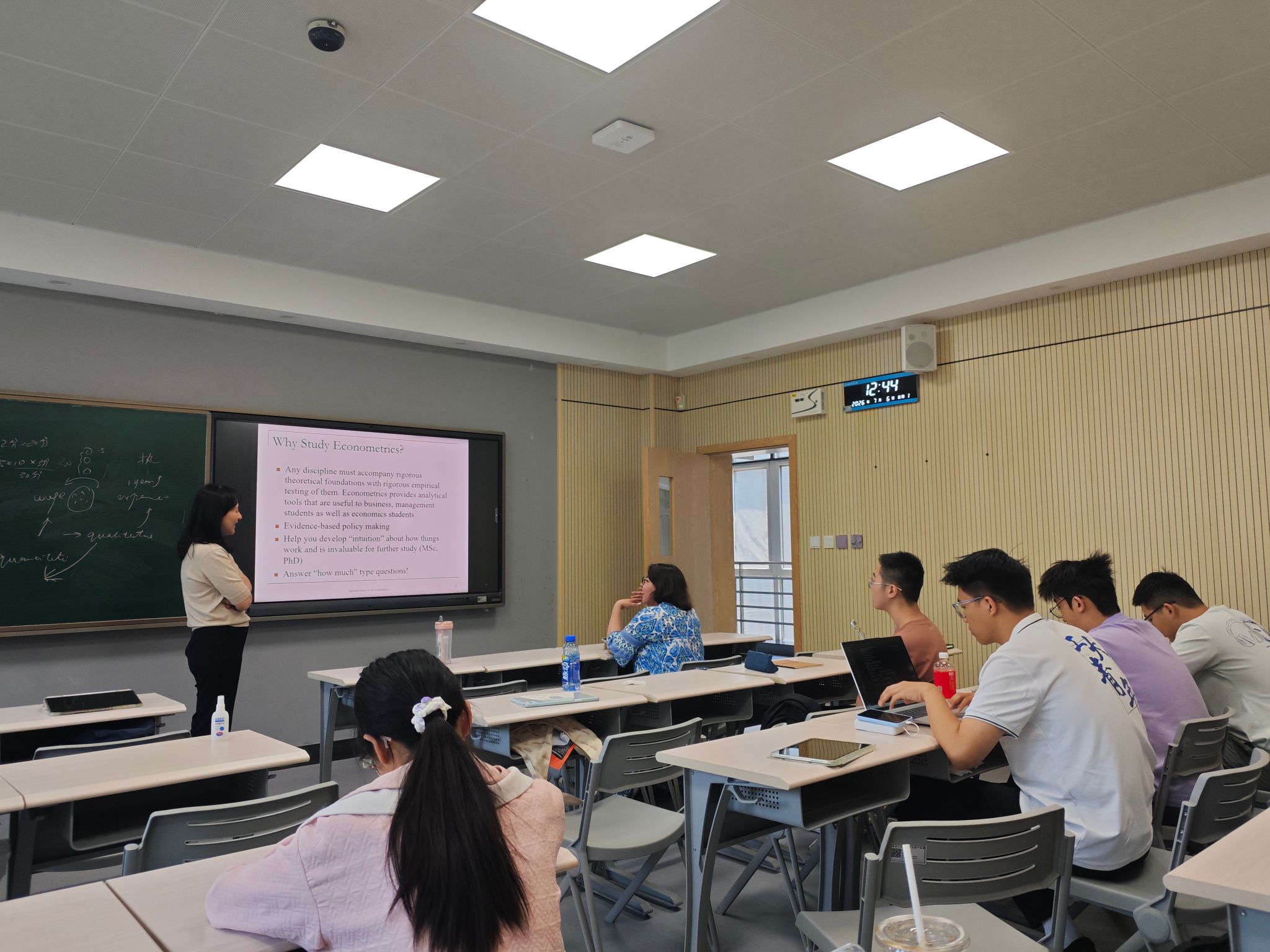
Econometrics II, taught by Associate Professor Rao Yao from the University of Liverpool Management School, systematically introduced time series analysis techniques based on modern methods and software. Covering the complete empirical research logic chain, topics ranged from probability theory foundations, econometric model construction, and interpretation of regression results, to addressing violations of classical assumptions (e.g., heteroskedasticity, autocorrelation), and forecasting future variables. De-emphasizing complex mathematical derivations, the course used practical cases like executive compensation and ROE to explain concepts. Students were guided in mastering EViews software operations, helping them overcome the stereotype that econometrics is dry and difficult. This fostered a mindset for using quantitative methods to analyze economic and management problems.
[Student Reflections]
"The course Supply Chain Resilience and Risk Management changed my understanding of supply chain management. Previously, I thought supply chains were primarily about reducing costs and improving efficiency. However, through case discussions, I realized that a seemingly low-cost supply plan might lose its advantage due to transportation lead times, tariffs, inventory holding, and supply risks. Furthermore, I recognized that supply chain risks exist not only within directly managed segments but also deeper within the supply network and external environment. This course taught me to analyze supply chain issues from a holistic network perspective and consider how to balance cost, efficiency, and risk."
— Zhang Rui, School of Management, Class of 2025
"In the summer of 2026, I had the privilege of participating in the course Marketing Strategy and Performance: An International Perspective. During the intensive one-week study period, I not only systematically learned classic marketing strategy frameworks but also deeply appreciated the dynamic nature and contextual dependency of strategic thinking in a globalized context. The course made me realize that a firm's choice of marketing strategy is not a static dogma, but a dynamic adaptation process deeply embedded in a specific country's institutional environment, industry development stage, and organizational capabilities. Furthermore, by incorporating frontier cases of global enterprises' digital transformation, the course revealed how technological change, market evolution, and institutional shifts intertwine to become key external variables affecting corporate strategic efficacy."
— Li Fuying, School of Management, Class of 2025
"Professor Chen Haoxun's frontier course Optimization Theory: Methods and Applications helped me reconstruct my knowledge framework in operations research and optimization within just one week. Starting from modeling real-world problems, the course sequentially explained exact solution methods for mixed-integer programming—Branch and Bound, Branch and Price, Benders Decomposition, and Lagrangian Relaxation—before transitioning to metaheuristics and finally stochastic optimization modeling and solving. What impressed me most was that every method was illustrated with examples clarifying its design motivation and applicable boundaries. I no longer view any single algorithm in isolation; instead, I understand the trade-offs between accuracy, efficiency, and handling uncertainty. Through application cases in supply chains and production scheduling, I saw that the true focus of optimization research must return to the problem itself. This has been highly enlightening for my subsequent research directions."
— Xia Youqiang, School of Management, Class of 2025
"The course Financial Statement Analysis allowed me to examine financial information from a completely new perspective. As a student from the School of Public Policy and Management, I previously thought financial statement analysis merely involved examining disclosed corporate reports. However, Professor Zhang presented financial analysis in a novel way, distinguishing between operating and financing activities to more accurately reflect a firm's operational capacity. The modules on liquidity risk analysis and forecasting were particularly eye-opening, teaching me how to assess a company's financial sustainability. Interactive case discussions with classmates from different schools greatly enriched my understanding."
— TJAHJADI TRISHA, School of Public Policy and Management, Class of 2024
 CHINESE
 Search