From June 11 to 15, 2025, the 11th IACMR International Conference, organized by the International Association for Chinese Management Research and hosted by the School of Management at Northwestern Polytechnical University (NPU), was successfully held in Xi’an. Under the theme “Empowering Sustainable Growth in the Digital-Intelligent Era,” the conference attracted numerous management scholars and business professionals from home and abroad to the ancient capital of Xi’an. Together, they explored innovative paths for management theory and practice amid the digital technology revolution.
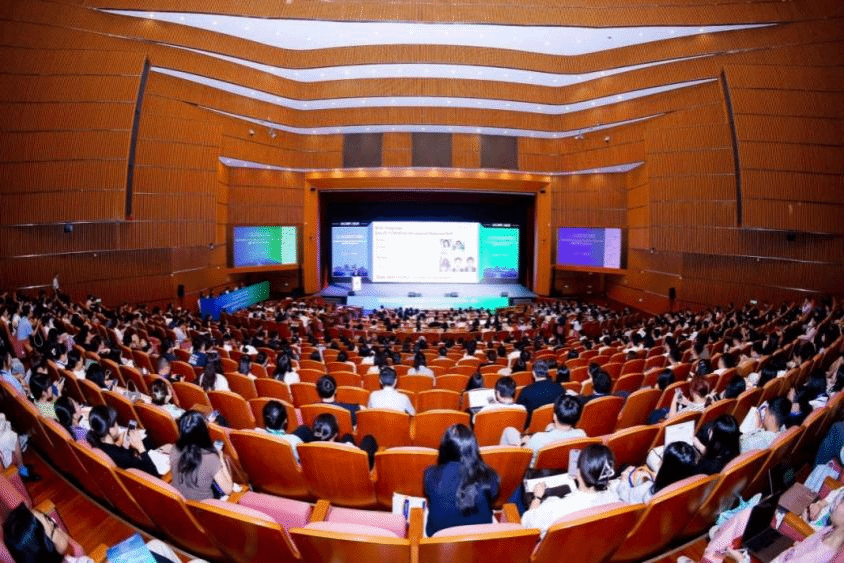
The conference featured 9 keynote speeches, 22 panel discussions, 26 professional development workshops (PDWs), 70 roundtable sessions, and 119 paper presentations. Covering cutting-edge topics such as AI innovation, organizational leadership, entrepreneurial ecosystems, ESG, and green strategies, the event demonstrated the growing global influence of Chinese management research and received extensive media coverage from mainstream outlets including People’s Daily and Xinhua News Agency.
On the morning of June 12, the conference officially opened. The opening ceremony was presided over by Professor Wei Shen (Arizona State University), Co-Chair of IACMR, who extended sincere gratitude on behalf of the 2025 IACMR to all participants and wished everyone fruitful exchanges and gains. Lv Weidong, Executive Deputy Secretary of the Party Committee of NPU, delivered the opening address. On behalf of the university, he welcomed and thanked the guests, highlighting NPU’s vision of becoming a “World-Class Polytechnic University and a Global Leader in Aeronautics, Astronautics, and Marine Technology” (literally “World’s Top Gongda, World’s Three Aerospace Domains”). He emphasized the university’s efforts to simultaneously drive “0 to 1” breakthroughs in basic sciences and “1 to 0” advancements in engineering technology, achieving remarkable results in scientific and technological innovation. While forging major national defense capabilities (“forging heavy swords for the nation”), NPU places high importance on the development of humanities and social sciences, always prioritizing the construction of management disciplines. The university strives to position management studies at the intersection with “three aerospace” disciplines, develop distinctive features, and has achieved outstanding accomplishments. He expressed hope that hosting this international academic event would further enhance the school’s global influence, promote high-quality, high-level, and high-speed development of management disciplines, jointly explore management innovation in the digital-intelligent era, and contribute wisdom and strength to global sustainable development.
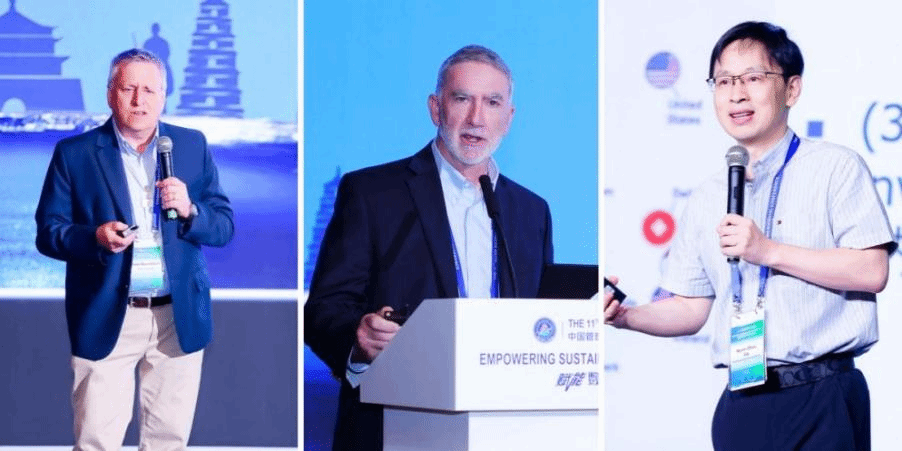
The keynote session following the opening brought together academic insights from top international scholars. Professor Peter Bamberger (Tel Aviv University) presented on “Management Scholarship in an Era of Technological and Sociopolitical Transformation: The Need for a Global Academy,” discussing how to maximize research impact using artificial intelligence. Professor Barry Gerhart (University of Wisconsin) focused on “Sustainable Growth: The Role of People Management and Pay for Performance,” systematically explaining how performance-based pay can effectively create value, enhance productivity, and improve performance by boosting employee Ability, Motivation, and Opportunity (AMO), emphasizing the cross-national and cross-cultural universality of his conclusions. Professor Kevin Zhou (University of Hong Kong) shared latest findings on “Innovation Development and China Strategy Research,” sparking reflections on innovation development in the Chinese context and calling for scholarly research on innovation strategies with Chinese characteristics.
With the rapid advancement of generative AI, the conference featured multiple in-depth discussions on AI. In the panel “Organizational Behavior Research in the AI Era,” scholars from Tsinghua University, Hong Kong Baptist University, and other institutions multi-dimensionally deconstructed the paradigm shift in human resource management in the AI era through distinguishing the essence of human-machine collaboration, exploring labor union governance mechanisms, analyzing AI recruitment behavioral strategies, and innovating research methods. The Enterprise Innovation Development Forum focused on AI’s impact on corporate green innovation, digital transformation, organizational resilience, and organizational ambidexterity, driving the transformation of corporate innovation strategies. Employee behavior research highlighted human-machine decision conflict, the dual-regulation of career growth, and AI-HRM experience interventions, revealing mechanisms from psychological adaptation to behavioral adjustment. In the field of technology ethics and practice, scholars deeply explored key issues such as strengthening data privacy protection, human-machine coexistence ethics, and asymmetric responsibility attribution, exploring feasible paths for collaborative governance.
The conference actively explored management research paradigms with Chinese characteristics. At the “Indigenous Innovation with Chinese Characteristics” panel, Professor Lu Feng (Peking University) illustrated the relationship between “technological breakthroughs” and industrial systems through specific industrial cases, together with Professor Gao Xudong (Tsinghua University) and Professor Liu Xielin (University of Chinese Academy of Sciences), building a dialogue platform that combined theoretical depth and practical value. The Management Research (formerly Quarterly Journal of Management) panel focused on “grounded in phenomena, expanding theory,” discussing how to highlight Chinese characteristics within mainstream research paradigms and construct a discourse system of Chinese management research with global influence.
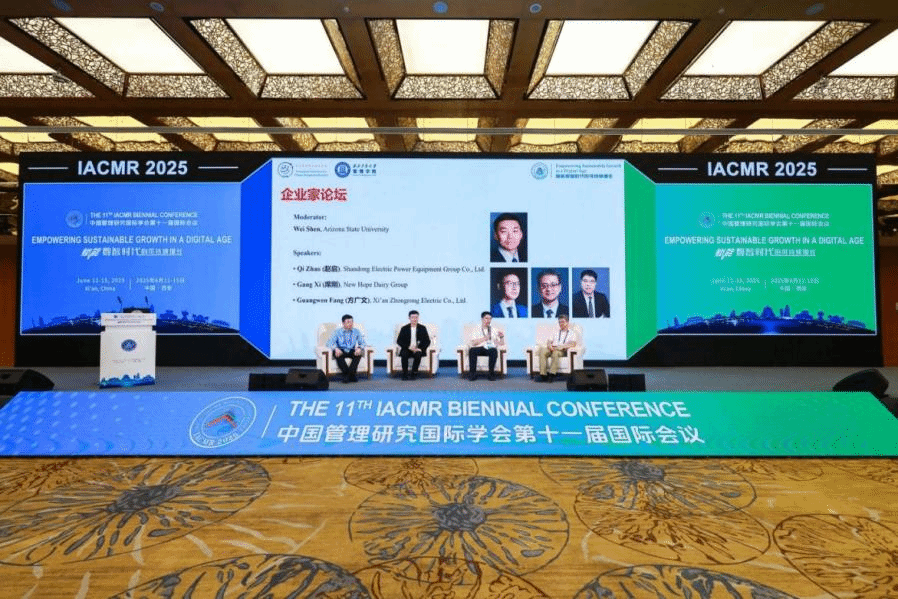
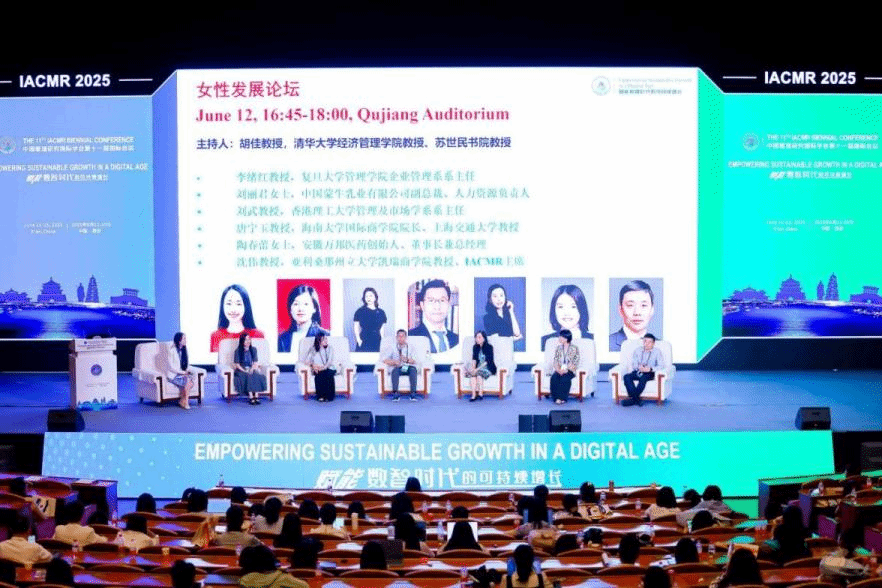
The conference activated sparks of wisdom through cross-boundary dialogues that deeply integrated academia and industry. The Entrepreneurs Forum featured invited entrepreneurs sharing practical experiences, demonstrating differentiated application paths of digital-intelligent technologies across industries, building a dialogue platform between academia and industry, and providing practical perspectives for understanding sustainable growth of enterprises in the digital-intelligent era. The Chinese Culture and Management Forum deeply explored the integration and innovation of traditional wisdom such as “valuing the virtuous,” “global vision,” and “cultivating oneself to bring peace to others, inner sageliness and outer kingliness” in modern corporate governance, highlighting the unique value of Eastern management thought. The Women Development Forum, through dialogues between academia and industry, analyzed obstacles to women’s leadership practice and research, jointly explored challenges and breakthroughs for women’s leadership in the digital-intelligent era, and called for building a more inclusive workplace environment.
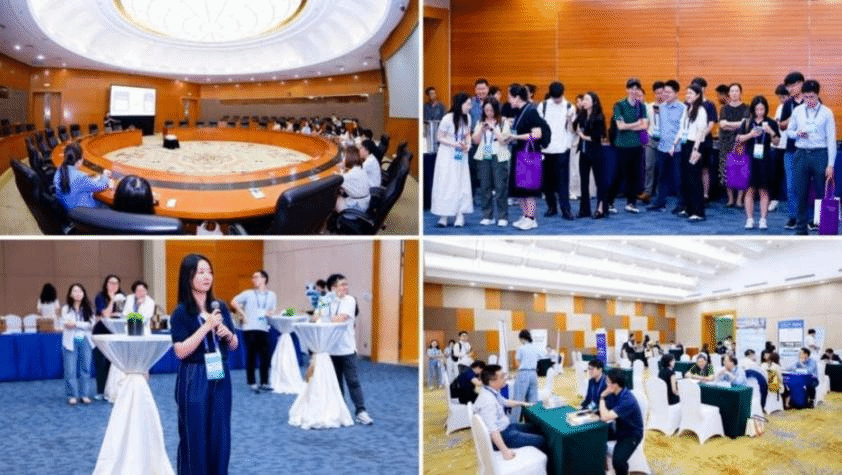
Talent cultivation and academic inheritance were another core focus of the conference. The Deans Forum brought together deans from top business schools including Xi’an Jiaotong University, Zhejiang University, Renmin University of China, and Dongbei University of Finance and Economics to jointly blueprint the development of management education in the digital-intelligent era. The Doctoral Student Forum specially invited winners of the “Dr. Liang Jue Memorial Dissertation Grant” to share their research projects and paper-writing experiences, providing a platform for young scholars to showcase cutting-edge research and exchange valuable insights. PDWs (Professional Development Workshops) covered multiple frontier topics across academic research, career development, and methodology, offering participants a platform for deep exchange and learning. During the conference, dedicated faculty recruitment sessions were held for business schools of The Hong Kong Polytechnic University, Shanghai Advanced Institute of Finance (Shanghai Jiao Tong University), School of Management (Xi’an Jiaotong University), and School of Management (NPU), along with a general recruitment area for nearly 30 universities, building a precise matching bridge between institutions and academic talents at home and abroad. These diverse activities comprehensively demonstrated the conference’s systematic layout in empowering new academic forces and promoting institutional development.
On the evening of June 14, the conference successfully closed. IACMR highly recognized the School of Management, NPU, for hosting this event. The next IACMR International Conference will be held in Hong Kong, themed “Wisdom Enlightens the Future: Chinese Management Research in the AI Era,” continuing to lead the frontiers of management research.
The successful hosting of this conference not only showcased the internationalization level of Chinese management research but also built an important platform connecting academic innovation and practical transformation. As digital-intelligent technologies accelerate their iteration, the consensus of ideas forged at the 11th IACMR International Conference will provide strong support for global organizations to meet challenges and achieve sustainable growth.
 CHINESE
 Search