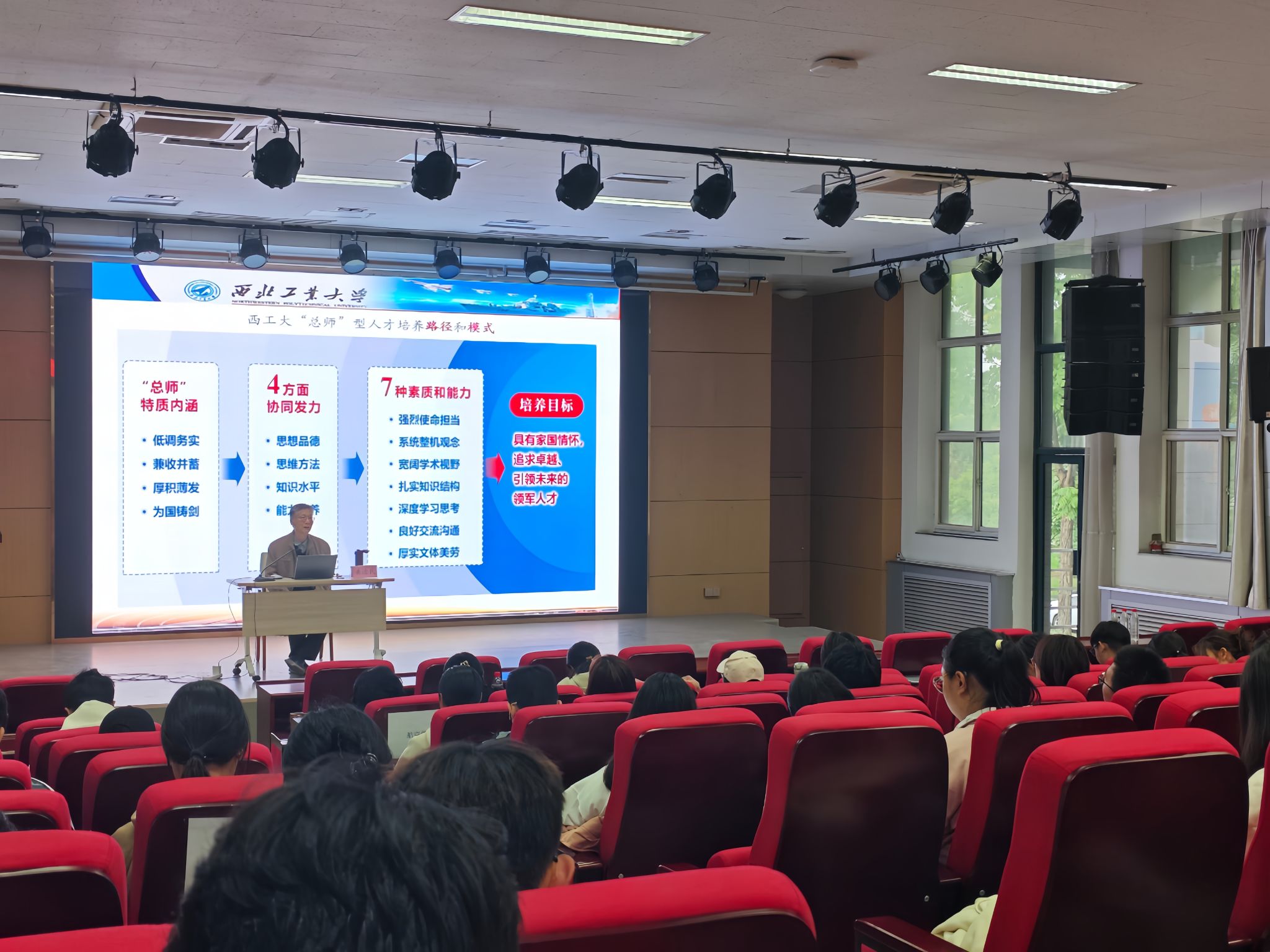
To thoroughly implement the spirit of the 14th Party Congress of the university and inherit and promote the "Chief Engineer Culture for Talent Cultivation", on October 26, the School of Management specially invited Huang Dimin, Head of the University’s "Five Elders" Lecture Group and "Silver-haired Lecturer" of the University’s Care for the Next Generation Work Committee, to give a special report entitled Connotation and Historical Inheritance of the "Chief Engineer Culture for Talent Cultivation" to more than 120 teachers and students.
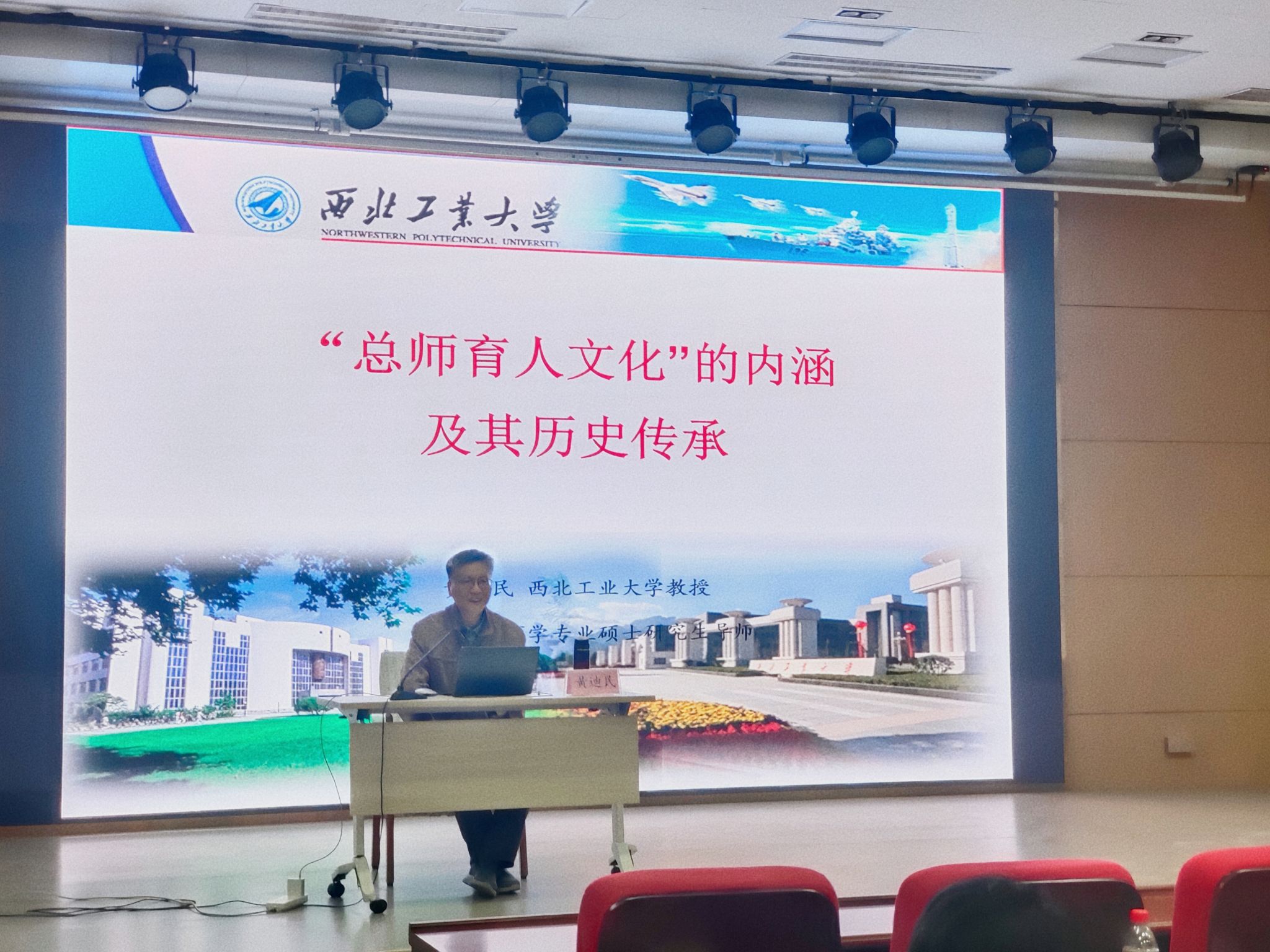
Huang Dimin first introduced the functions and culture of modern universities, pointing out that the "Chief Engineer Culture for Talent Cultivation" is the educational philosophy and campus spirit formed by Northwestern Polytechnical University in long-term teaching practice. He emphasized that as the "Cradle of Chief Engineers", NPU shoulders the historical mission of "cultivating pillars of the nation and forging strategic weapons of the country". Adhering to the principle of educating people for the Party and the country, the university has formed a distinctive independent training model for national defense science and technology talents.
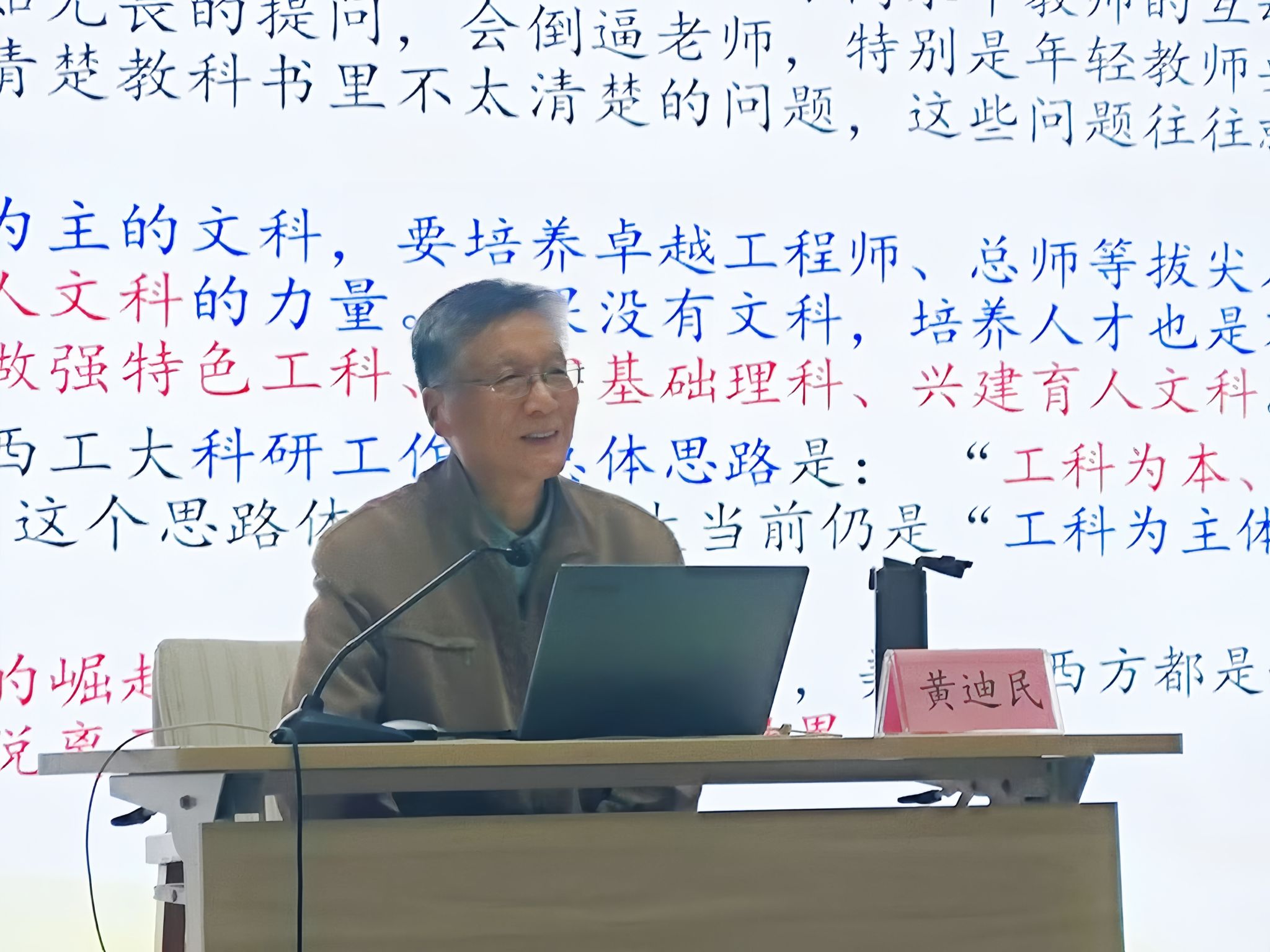
Huang Dimin elaborated on the connotation and formation background of the "Chief Engineer Culture for Talent Cultivation", noting that its formation is a historical inevitability in the development of NPU. Social evaluation and practical verification have provided fertile soil for the birth of this culture, while the constant refinement and upgrading of educational philosophy constitute its theoretical sublimation.
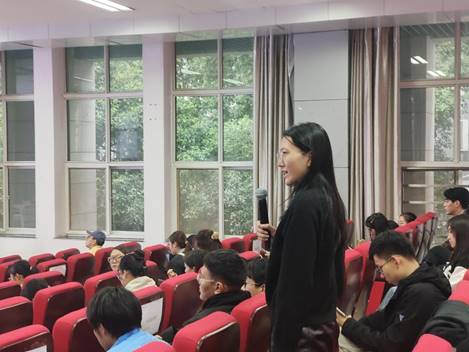
Students raised questions on how to integrate the "Chief Engineer Culture for Talent Cultivation" into daily study and the practice of management disciplines. Huang Dimin pointed out that "chief engineer-type" talents should all possess management knowledge. He encouraged students to internalize and practice the culture, deeply understand its connotation, solidify their professional foundation, actively participate in practical activities, attach importance to teamwork, set ambitious goals, and become future leaders and contributors to society.
This activity not only deepened students’ understanding and recognition of the university and school history as well as the "Chief Engineer Culture for Talent Cultivation", but also further clarified their responsibilities and missions as students, and inspired their determination to contribute to the development of the university. Taking this report as an opportunity, teachers and students of the School of Management will continue to deepen their understanding and practice of the "Chief Engineer Culture for Talent Cultivation" and make unremitting efforts to cultivate more top-notch innovative "chief engineer-type" talents.
(Written by Li Xinyi, Li Tiantian Reviewed by Wang Haixiao)
 CHINESE
 Search