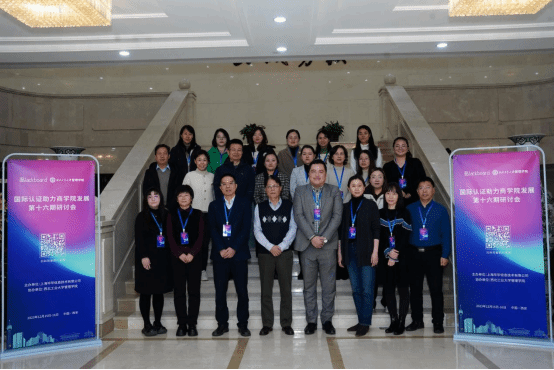
From December 15 to 16, 2023, the 16th Seminar on Promoting Business School Development through International Accreditation, hosted by Shanghai Bibi Research Institute and co-organized by the School of Management, Northwestern Polytechnical University, was successfully held at Northwestern Polytechnical University.
Professor Lee Tien-hsing, official AACSB accreditation mentor, Chair of the Peer Review Team (PRT) for on-site visits and member of the Initial Accreditation Committee (IAC); Professor Shen Wei, Associate Vice-Chancellor of Deakin University; Mr. Du Shiqing, Director of the Undergraduate Teaching Program at the School of Management, Xi'an Jiaotong University; Ms. Qin Luohan, Director of the International Accreditation Office at the International Business School of University of International Business and Economics; and Mr. Chi Guofu, Director of Shanghai Bibi Co., Ltd., were present to deliver insightful speeches. Professor Che Ada, Dean of the School of Management, Northwestern Polytechnical University, delivered a welcome address. The seminar was hosted by Associate Professor Shao Jing, Assistant Dean and Director of the International Accreditation Office. Leaders and international accreditation administrators from numerous universities across China attended the event.
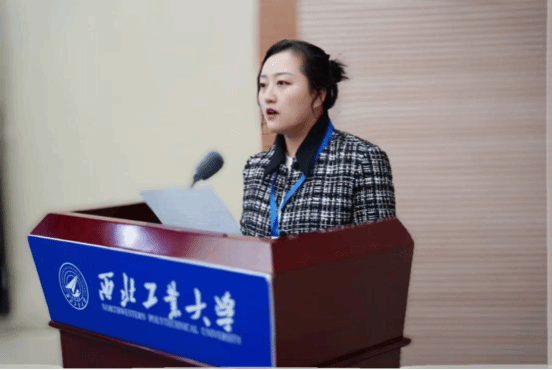
Dean Che Ada extended sincere gratitude to the guest speakers, participating leaders and faculty members. He also gave a brief introduction to Northwestern Polytechnical University and its School of Management. He emphasized that the School of Management attaches great importance to international accreditation, is willing to maintain cooperation and exchanges with peer institutions, and is committed to advancing internationalization and cultivating innovative talents.
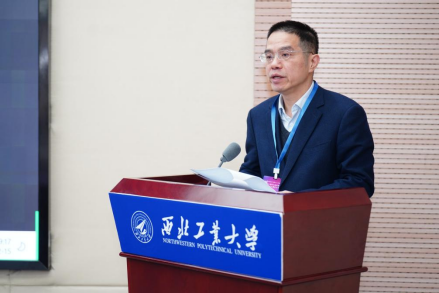
On December 15, Professor Lee Tien-hsing delivered a keynote speech themed Key Challenges and Solutions of Curriculum Assurance of Learning (AoL) in AACSB International Accreditation. From the perspective of an official AACSB mentor, he provided a detailed interpretation and summary of the requirements of Standard 4. Drawing on practices and case analyses from Fu Jen Catholic University, Taiwan, China, he enhanced the participants’ comprehensive understanding of AACSB standards. Professor Lee also shared practical experience and guidance on the standard procedures of the AoL curriculum training system, the application of diversified assessment methods, the design of scoring rubrics, and strategies to motivate faculty participation in AoL initiatives. He stressed that continuous improvement is the core spirit of AACSB, making the ongoing refinement and optimization of AoL processes an essential task.
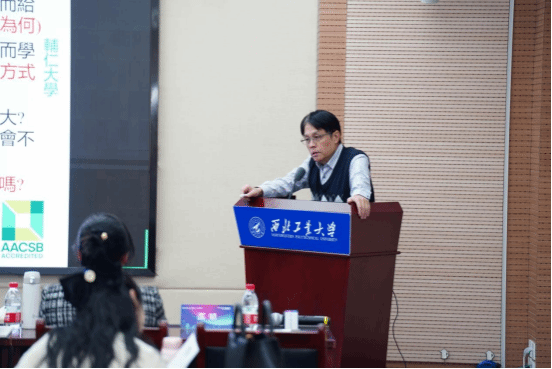
On December 16, Professor Shen Wei delivered a presentation themed The Internationalization of Business Schools. With long-standing dedication to the internationalization of education and international accreditation in business education, he elaborated on the value of international accreditation for business schools and shared relevant experience in EQUIS international accreditation. Combining the case of Deakin University’s internationalization strategy, his speech covered diverse international student programs, globally connected education models, and fostering global mindsets among graduates.
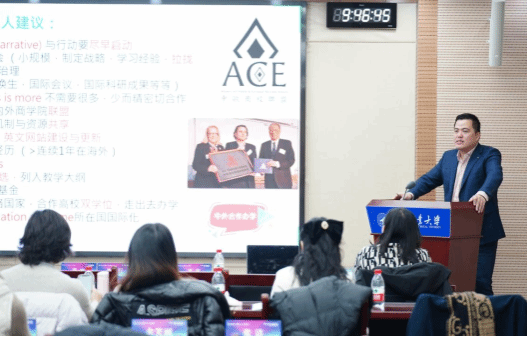
Mr. Du Shiqing shared the accreditation experience of the School of Management, Xi'an Jiaotong University. She noted that the school has been committed to internationalization since the 1980s, launching its journey of management education internationalization through China-Canada education cooperation programs. Since 2018, guided by its Internationalization 3.0 Strategy, the school has explored overseas joint education initiatives, promoted in-depth customized cooperation between private enterprises and prestigious universities, cultivated high-level management talents, and pioneered new models for Chinese management education. She also shared practical insights into addressing the challenges encountered in AoL implementation.
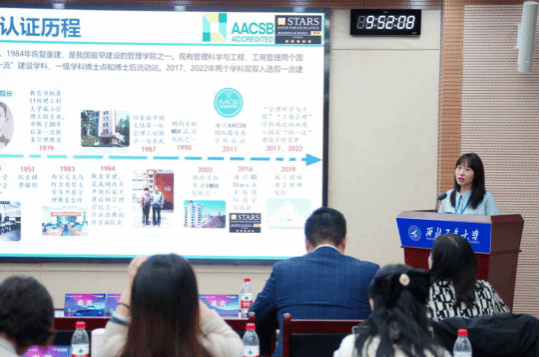
Ms. Qin Luohan started with an overview of the international accreditation status of the International Business School of University of International Business and Economics. She conducted a comparative analysis of the similarities and differences among the three major international accreditations, providing a comprehensive explanation of their respective priorities, challenges, timelines, costs, outcomes, and standard distinctions. Additionally, she elaborated on how to make thorough preparations for international accreditation, helping participating institutions gain a deeper understanding of the pre-work required for on-site visits.
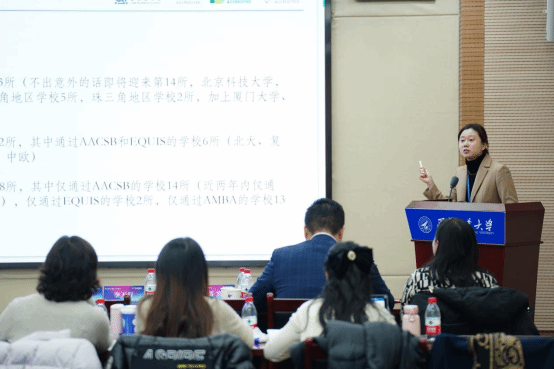
Mr. Chi Guofu shared insights on the application of digitalization in university international accreditation, focusing on how information technology and digital tools can support universities in their accreditation endeavors. He emphasized that digitalization can enhance the accreditation efficiency of business schools, reduce the workload of accreditation staff, and enable the efficient and standardized management of large volumes of documentation, while ensuring data accuracy and consistency. He pointed out that building an international accreditation data center is an inevitable requirement of the times and represents a new paradigm for international accreditation in the new era.
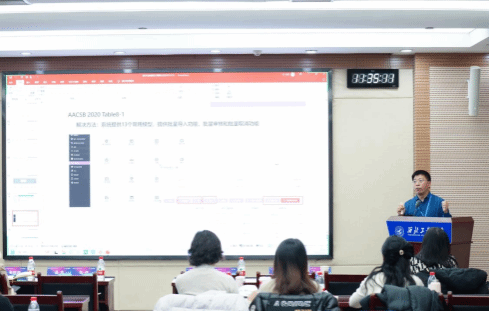
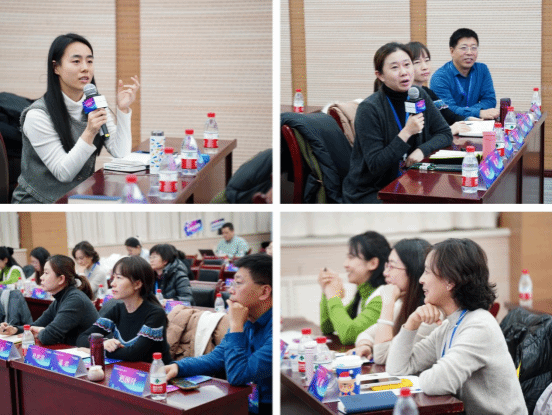
During the interactive session, both online and offline participants actively raised questions, discussing practical challenges they encountered with the guest speakers. The guests provided valuable guidance based on their rich experience, and the participants expressed that they had benefited greatly from the exchanges.
Up to now, the Seminar on Promoting Business School Development through International Accreditation has been held 16 times. It aims to advance the development of business schools by bringing together official international accreditation bodies and seasoned experts in the field. The seminar leverages collective strengths to create a platform for mutual learning and experience sharing among universities, building a bridge to the internationalization of business education.
(Written by Ma Xiaoke; Reviewed by Shao Jing & Che Ada)
 CHINESE
 Search