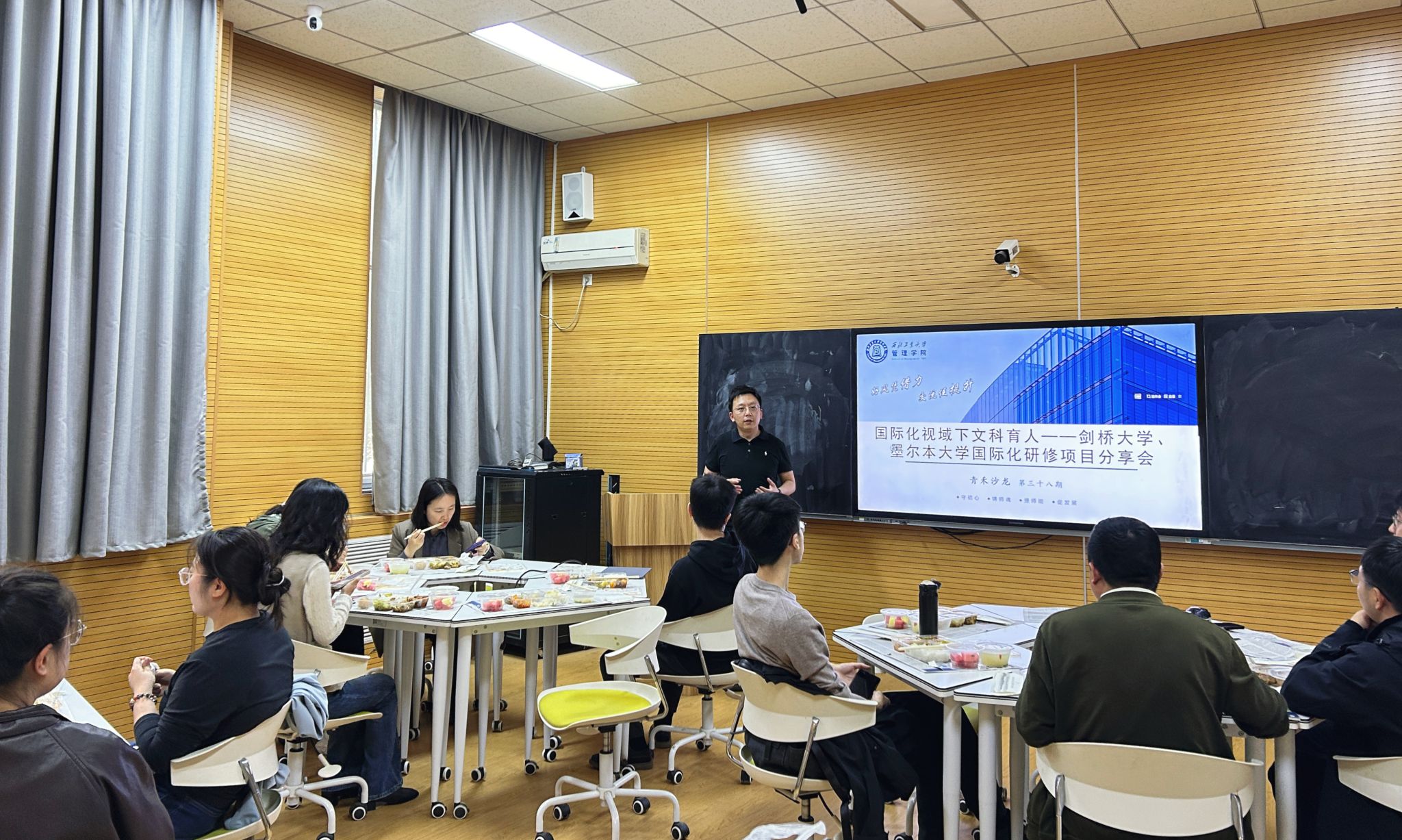
On April 16,the 29th“Chasing Dreams”Faculty Salon and the 38th Qinghe Salon, organized by the Faculty Affairs Office of the CPC Nnorthwestern Polytechnical University Committee and hosted by the School of Management, were held in Lecture Hall 120 of the School of Management. Centered on the theme of “Liberal Arts Education in an International Context,” the event featured Associate Professors Feng Hua and Geng Ruibin—who had participated in the EMI teaching training program at the University of Cambridge and the University of Melbourne—as keynote speakers. They delivered in-depth presentations on the design and implementation of fully English-taught courses and educational transformation in the AI era, respectively. The salon was moderated by Li Chenglong, Assistant to the Dean of the School of Management, and was attended by over twenty faculty members.
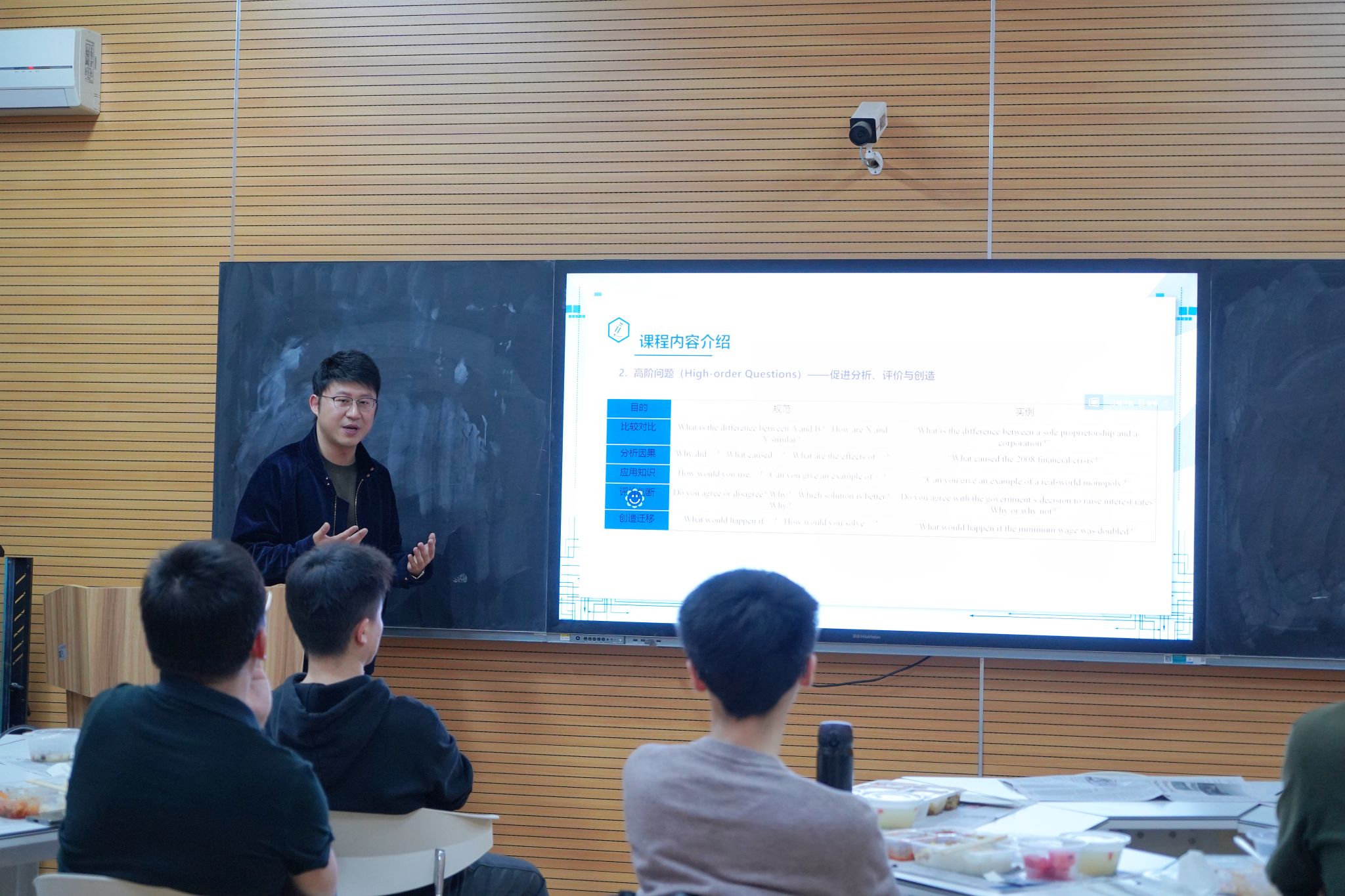
Drawing on his professional development experience at the University of Cambridge—which featured a three-pronged approach of “theoretical strategies, thematic lectures, and classroom observations”—Feng Hua systematically shared EMI teaching philosophies and practical strategies. He pointed out that EMI differs from simply teaching in English; rather, it is a “content-driven, student-centered” teaching paradigm that requires teachers to transition from traditional “knowledge transmitters” to “learning designers, facilitators, and supporters.” Drawing on his teaching experience, he highlighted three key instructional design and implementation strategies: First, the backward design approach, which involves working backward from expected learning outcomes to establish instructional objectives and assessment criteria, and then designing learning experiences and activities to ensure that every component is closely aligned with student learning outcomes. Second, the Q-DRESS questioning strategy, which balances students’ language readiness, cognitive difficulty, and willingness to participate by designing tiered questions—ranging from lower-order to higher-order—to guide students from simple to complex thinking. Third is the “3R Principle,” whereby teachers continuously and dynamically adjust course plans and instructional activities through revisiting, reviewing, and refining, thereby achieving iterative improvements in teaching quality.
Drawing on his own teaching experience, he recommended that teachers establish a support system for subject-specific vocabulary to reduce students’ language barriers and comprehension difficulties; introduce “signpost language” to help students grasp the pace of the class and the flow of knowledge; innovate classroom interaction models to boost student engagement; and adopt multimodal teaching methods to provide students with diverse channels for information intake. He concluded: “Teaching a course effectively requires not only a solid foundation of knowledge and accumulated experience, but also the synergistic integration of linguistic expression, psychological insight, and teaching techniques. The core of EMI instruction lies not merely in improving English proficiency, but in the innovation of pedagogical philosophy and the systematic training of students’ English-language thinking. The professional development opportunities provided by the university and the college have created a valuable platform for us to broaden our international perspectives and enhance our teaching capabilities.”
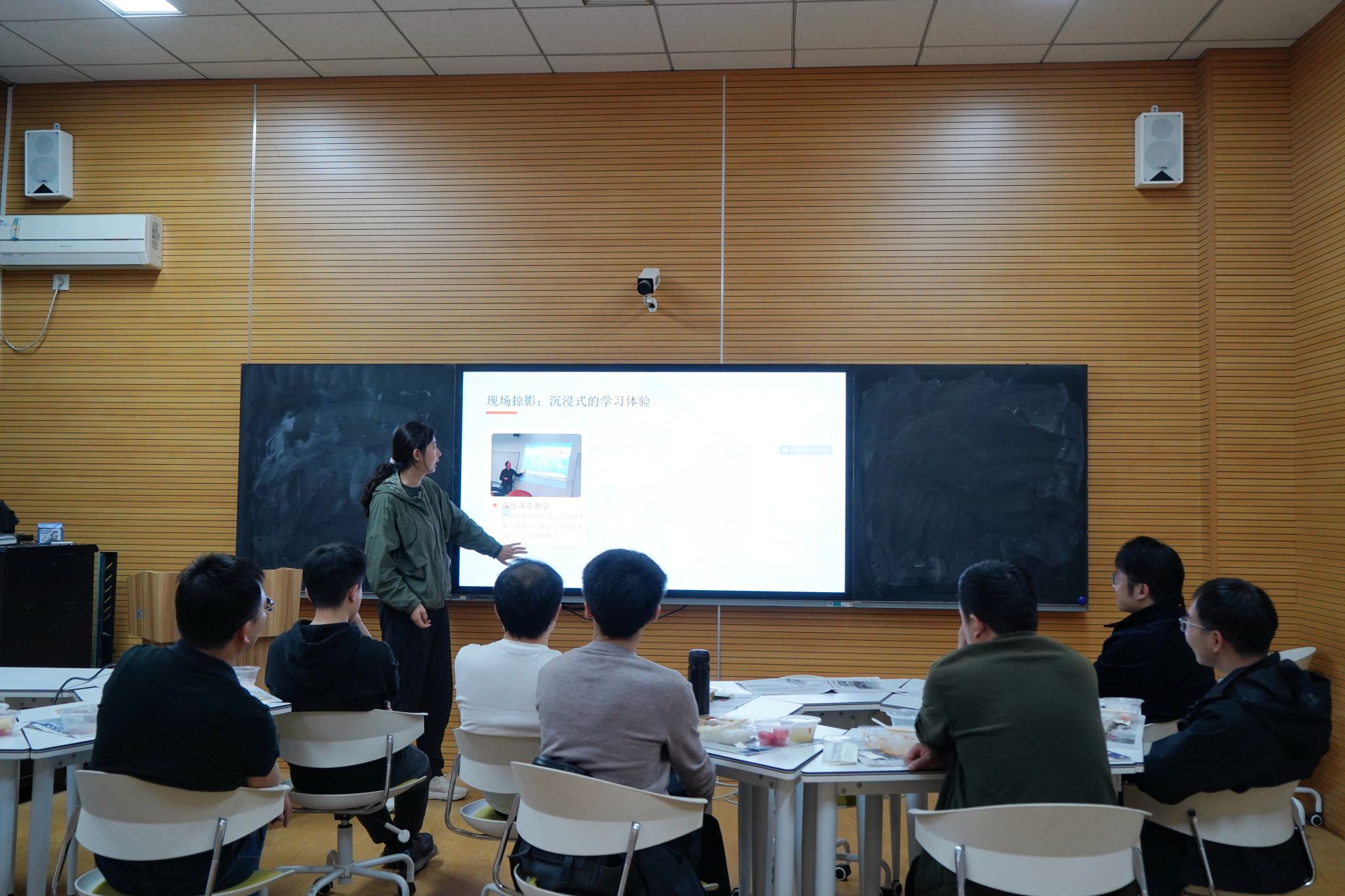
Under the theme “When AI Meets the Classroom,” Geng Ruibin shared insights gained from her study program at the University of Melbourne, focusing on the educational philosophy of space, the redefinition of “learning” in the AI era, how AI is reshaping education, and practical recommendations for classroom reform. She summarized the educational philosophy conveyed by the University of Melbourne’s flexible learning spaces with the phrase “Space is Philosophy”—flexible and adaptable furniture layouts, circular interactive learning spaces, and a seamlessly integrated technological environment have reconstructed a student-centered collaborative environment, reflecting a shift from a “teaching-centered” to a “learning-centered” approach. A fellow teacher remarked, “Their hallways are our classrooms.” In the AI era, the focus of education has shifted from one-way knowledge transmission to the cultivation of students’ comprehensive abilities: on one hand, promoting a return to metacognition—guiding students to “reflect on their own thinking,” identify their learning styles and weaknesses, enhance their intuitive judgment of knowledge, and proactively plan and adjust learning strategies; on the other hand, implementing authentic assessment—simulating real-world challenges in teaching to cultivate students’ ability to solve complex problems. She used the vivid metaphor of shifting from “filling” to “igniting” to summarize AI’s reshaping of education—the core mission of teachers is no longer the one-way transmission of knowledge, but rather igniting students’ inner curiosity and desire to learn. She further emphasized, “We should not teach students to engage in purely logical deduction, algorithmic computation, and rational analysis in opposition to AI; instead, we should guide them back to ‘wet’ real-life experiences.”
Through a further analysis of teaching differences and integration from both Chinese and Australian perspectives, she proposed three actionable recommendations for classroom reform: conducting in-depth reviews of teaching processes and maintaining a personal teaching improvement log; establishing a closed-loop system for student feedback to drive teaching improvements with students at the center; and continuously updating the teaching toolkit to ensure that classes remain fresh and engaging.
The participating faculty members noted that the presentations by the two instructors offered both cutting-edge international perspectives and practical teaching strategies, opening up new avenues of thought regarding English-medium instruction and the integration of AI into the classroom. Moving forward, the university and the college will continue to organize such professional development and knowledge-sharing events to drive iterative innovation in teaching philosophies and methods, enhance faculty members’ capabilities in international teaching, and improve the quality of English-medium and bilingual courses.
Brief Introduction to the Qinghe Salon
The Qinghe Salon of the School of Management is a learning and exchange platform for young teachers, initiated and established voluntarily by the backbone of young teachers with the care and support of the Party Committee of the School.
Through a series of diverse and rich-themed activities including teacher ethics and conduct education, university history and culture briefings, scientific research and academic exchanges, teaching experience sharing, and professional competency improvement, the Qinghe Salon fulfills its core mission of "Upholding the original aspiration, forging the teacher’s soul, enhancing teaching capacity, and promoting development". It aims to help young teachers gain a deeper understanding of teacher ethics and conduct, guide them to firm their ideals and beliefs, foster a profound love for the motherland and the university, and cultivate noble professional ethics. It also promotes the continuous improvement of young teachers’ teaching and research capabilities, and serves as a new scientific model for the career development of young teachers in our School.
The salon is named "Qinghe" (Green Seedling) , which symbolizes the youth, vitality and hope of young teachers. It is expected that young teachers will surely mature in the future, bravely shoulder their missions, and reap fruitful achievements in their academic careers.
 CHINESE
 Search